US Housing Market: 3% Price Growth Expected by 2026
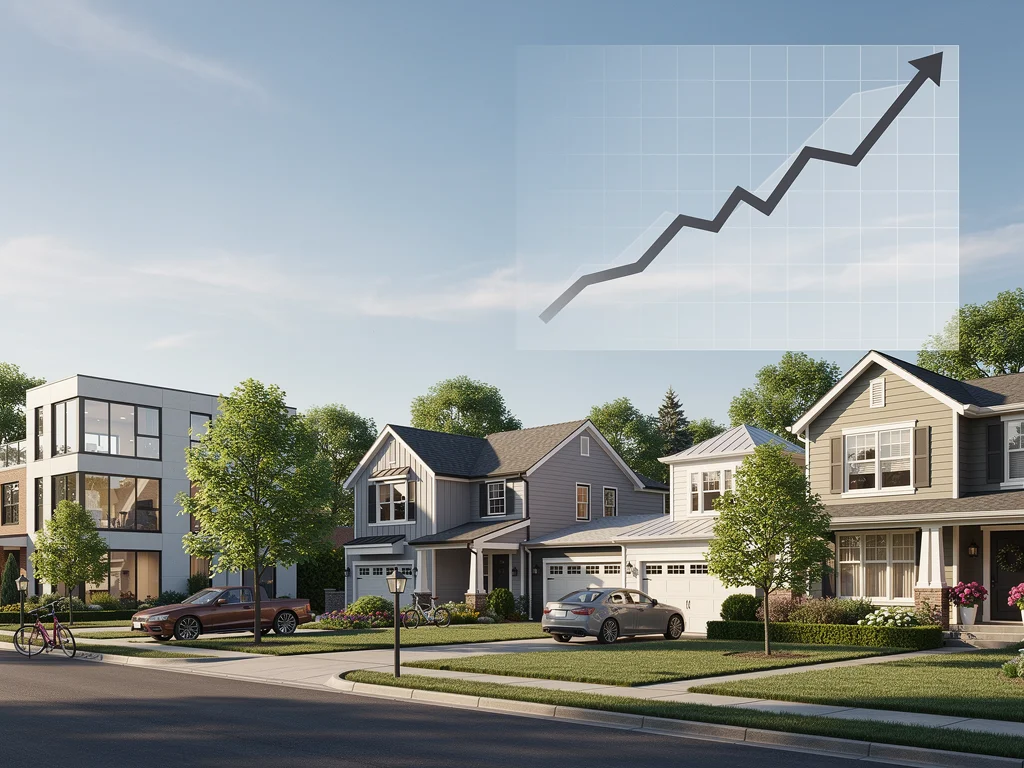
Expert analysis suggests the US housing market is set to stabilise, with home prices projected to experience a steady 3% growth rate by 2026, influenced by evolving economic conditions and supply-demand dynamics.
Por: [email protected] em 25 de maio de 2026
Última atualização em: 13 de agosto de 2026
Expert analysis indicates the US housing market is on track for stabilisation, with home prices anticipated to achieve a consistent 3% growth rate by 2026, driven by a balance of supply, demand, and economic factors.
The US Housing Market Forecast for 2026 presents a picture of cautious optimism, with expert analysis projecting a stabilisation of home prices and a steady 3% growth rate. For homeowners, prospective buyers, and investors alike, understanding these projections is crucial in navigating the evolving real estate landscape.
Understanding the current US housing market dynamics
The US housing market has experienced a rollercoaster of activity over the past few years, marked by unprecedented demand, rapid price appreciation, and more recently, a period of recalibration. Understanding these dynamics is essential to grasp the projections for 2026. The market has been influenced by a confluence of factors, including historically low interest rates that spurred buying activity, followed by significant rate hikes designed to curb inflation. This shift has naturally impacted affordability and buyer sentiment across the nation.
Currently, we are observing a market that is neither in freefall nor experiencing runaway growth. Instead, it appears to be seeking a new equilibrium. Inventory levels, while still tight in many desirable areas, have shown some signs of improvement, offering buyers slightly more choice than in the peak pandemic years. However, the fundamental issue of housing supply, particularly of affordable starter homes, remains a persistent challenge.
Key factors shaping today’s market
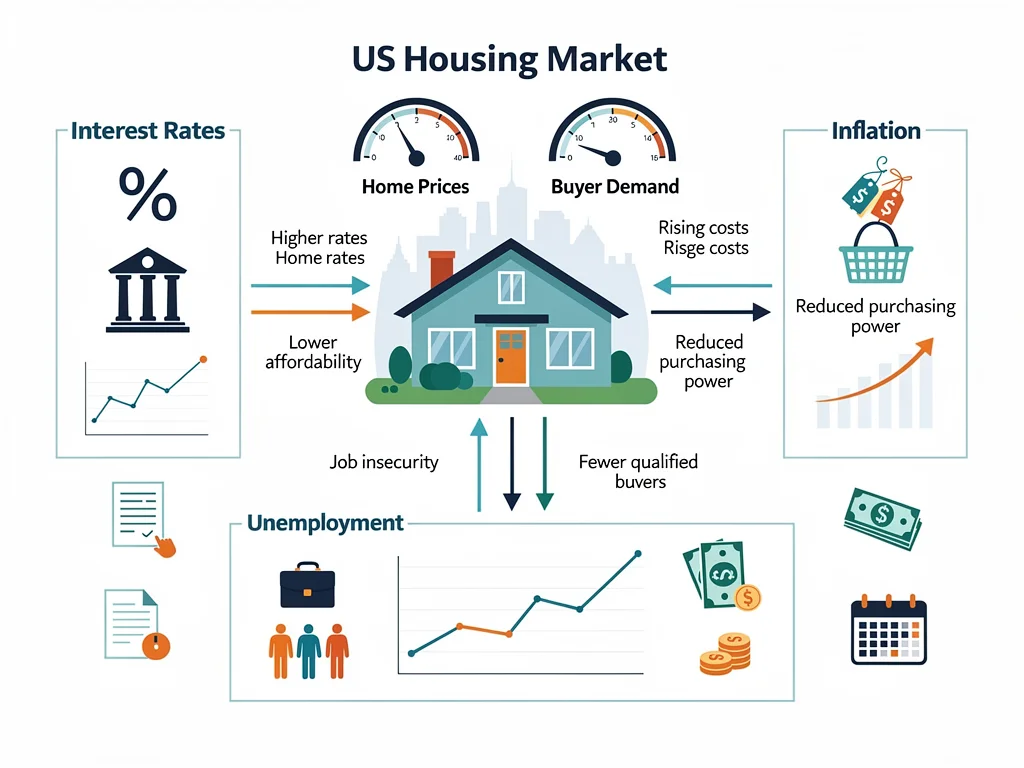
Several critical elements are at play, dictating the current state of the US housing market. These factors interact in complex ways, creating a multifaceted environment for both buyers and sellers.
Interest rate fluctuations: The Federal Reserve’s monetary policy has a direct impact on mortgage rates, influencing borrowing costs and subsequently, buyer purchasing power.
Inflationary pressures: High inflation can erode consumer confidence and increase the cost of construction, affecting both new build prices and renovation budgets.
Inventory levels: The number of homes available for sale remains a primary driver of price movement. Low inventory typically leads to higher prices due to increased competition.
Demographic shifts: The ongoing movement of populations, particularly younger generations entering prime homeownership years, continues to shape demand in various regions.
The interplay of these forces means that while national trends provide a broad overview, local markets can exhibit significant variations. What might be a buyer’s market in one city could still be a seller’s market just a few hundred miles away. This regional divergence is a hallmark of the current housing landscape, making localised analysis increasingly important for accurate predictions.
In conclusion, the current US housing market is in a state of transition, moving from a period of intense heat to one of gradual cooling and adjustment. The forces of interest rates, inflation, supply, and demographics are all contributing to a more nuanced and less predictable environment than what was observed in the immediate post-pandemic era. This foundational understanding sets the stage for appreciating the expert predictions for 2026.
Expert predictions for 2026: A 3% growth rate
Leading economists and real estate analysts are converging on a forecast that suggests a more stable and predictable US housing market by 2026. The consensus points towards a modest yet steady 3% growth rate in home prices, a significant departure from the double-digit increases seen in recent years. This projection reflects an anticipated normalisation of economic conditions and a better balance between supply and demand.
This 3% growth rate is often viewed as a healthy, sustainable pace, aligning more closely with historical averages rather than speculative booms. It indicates a market where homes retain their value and appreciate reasonably, without the volatility that can lead to affordability crises or market corrections. Such a rate would allow wages to catch up, improving overall housing affordability for many prospective buyers.
Factors underpinning the 2026 forecast
Several key assumptions and trends underpin the expert prediction of a 3% growth rate. These include macroeconomic stability, an easing of inflation, and a gradual improvement in housing supply.
Stabilising interest rates: While not expected to return to historical lows, mortgage rates are projected to stabilise at levels that are more manageable for a broader segment of buyers, reducing the shock of recent increases.
Controlled inflation: As inflation comes under control, the Federal Reserve will likely adopt a less aggressive monetary policy, which in turn supports a more predictable economic environment for housing.
Continued job growth: A robust job market provides the income stability necessary for individuals and families to consider homeownership, even if prices are slightly higher.
Incremental supply increases: While not a rapid solution, new construction is expected to slowly add to the housing stock, helping to alleviate some of the persistent inventory shortages.
The 3% growth forecast also implicitly acknowledges the resilience of the US economy and the enduring demand for homeownership. Despite challenges, owning a home remains a significant aspiration for many Americans, driven by wealth building, stability, and lifestyle preferences. This underlying demand acts as a floor for price declines and provides a basis for continued, albeit moderated, appreciation.
In essence, the 2026 forecast paints a picture of a mature market moving away from speculative highs towards a more sustainable growth trajectory. This shift is welcomed by many who seek long-term stability and predictability in their real estate investments. It suggests a market that is cooling but not collapsing, offering opportunities for both buyers and sellers to plan with greater confidence.
Key drivers influencing future home prices
The trajectory of US home prices towards a projected 3% growth rate by 2026 is not a random occurrence but rather the result of several interconnected economic and social drivers. Understanding these influences is crucial for anyone looking to navigate the future housing landscape, whether as a buyer, seller, or investor. These drivers can broadly be categorised into economic conditions, supply-side factors, and demographic shifts.
Economic conditions, such as inflation and interest rates, play a particularly dominant role. When inflation is high, the cost of borrowing typically increases as central banks raise rates to cool the economy. This makes mortgages more expensive, reducing buyer affordability and dampening demand. Conversely, when inflation is under control, interest rates tend to stabilise or even decrease, making homeownership more accessible.
Economic factors at play
The broader economic environment forms the bedrock upon which housing market forecasts are built. A healthy economy generally supports a healthy housing market.
Inflation trends: Persistent high inflation can lead to higher mortgage rates and increased construction costs, ultimately impacting home prices. A return to target inflation levels would foster greater market stability.
Interest rate environment: The Federal Reserve’s policy on interest rates directly affects mortgage rates. A period of stable or slightly declining rates would significantly boost buyer confidence and affordability.
Employment rates and wage growth: Strong employment figures and rising wages provide consumers with the financial capacity to purchase homes, underpinning demand.
Economic growth (GDP): A healthy Gross Domestic Product indicates a robust economy, which typically correlates with a strong housing market as consumer confidence remains high.
Beyond these macroeconomic indicators, the supply of available homes remains a critical determinant. Years of underbuilding in many parts of the US have created a structural housing shortage. While new construction is underway, it often struggles to keep pace with demand, especially in rapidly growing urban and suburban areas. This imbalance inherently puts upward pressure on prices, even in a stabilising market.
Finally, demographic shifts continue to exert a powerful influence. The large millennial generation is increasingly entering their prime home-buying years, contributing to sustained demand. Furthermore, population migration patterns, driven by factors like remote work flexibility and affordability considerations, are reshaping local housing markets, creating demand hotspots in unexpected locations.
In summary, the projected 3% growth in US home prices by 2026 is a complex interplay of moderating inflation, stabilising interest rates, persistent supply constraints, and ongoing demographic demand. These drivers collectively paint a picture of a market that is returning to more traditional patterns of appreciation, moving away from the frenetic pace of recent years.
Regional variations and their impact on national averages
While national forecasts, such as the projected 3% growth in US home prices by 2026, provide a valuable overview, it is crucial to recognise that the housing market is inherently local. Regional variations can significantly impact how these national averages manifest on the ground, with some areas experiencing higher growth, others more modest gains, and a few potentially seeing slight contractions. These disparities are driven by a unique mix of local economic conditions, population shifts, and housing supply dynamics.
For instance, fast-growing tech hubs or sun-belt cities experiencing significant in-migration might continue to see above-average price appreciation due to sustained demand and often limited developable land. Conversely, regions facing economic headwinds, population decline, or an oversupply of housing might experience slower growth or even price stagnation. Understanding these nuances is vital for both potential buyers and sellers, as a national trend may not accurately reflect their specific local market.
Factors creating regional divergence
Several distinct factors contribute to the varied performance of housing markets across the United States. These elements often interact to create unique local conditions.
Local economic health: Regions with diverse, growing economies and strong job markets tend to support higher home prices and robust demand. Areas reliant on a single industry might be more vulnerable to economic downturns.
Population migration: Influxes of new residents, often driven by job opportunities or quality of life factors, create demand pressures that can drive up home values. Out-migration can have the opposite effect.
Housing supply and development: Local zoning laws, availability of land, and construction costs dictate how easily new housing can be built. Areas with restrictive policies or high building costs often face chronic supply shortages, leading to higher prices.
Affordability: In some high-cost areas, affordability ceilings might limit further rapid price growth, pushing demand towards more affordable neighbouring regions or entirely new markets.
The rise of remote work has also played a significant role in exacerbating or mitigating these regional differences. It has allowed some individuals to move from expensive coastal cities to more affordable inland areas, redistributing demand and impacting local price dynamics. This trend continues to evolve, making long-term predictions for specific regions more complex.
Therefore, while the national forecast for a 3% growth rate in US home prices by 2026 offers a general direction, it serves as an average. Individual market performance will vary, influenced by a unique blend of local economic vitality, demographic shifts, and the responsiveness of housing supply to demand. Prospective homeowners and investors should conduct thorough research into their specific local markets rather than relying solely on national figures.
The role of affordability and buyer behaviour
Affordability remains a central concern in the US housing market, significantly influencing buyer behaviour and, consequently, future home price trajectories. The projected 3% growth rate by 2026 implies a market where affordability, while still challenging for many, begins to stabilise relative to income growth. This is a crucial distinction from periods where home price appreciation far outpaced wage increases, creating significant barriers to entry for first-time buyers.
Buyer behaviour is intrinsically linked to perceived affordability. When mortgage rates are high and home prices are elevated, potential buyers may opt to delay their purchase, rent for longer, or move to more affordable regions. This collective decision-making can temper demand and prevent runaway price growth. Conversely, signs of stabilising or slightly declining rates, coupled with more moderate price increases, can bring hesitant buyers back into the market, providing a steady base for the projected growth.
Shifting buyer priorities and market responses
The experiences of the past few years have reshaped what buyers prioritise and how they approach the market. This evolution in behaviour is a key component in the broader market outlook.
Increased focus on value: Buyers are becoming more discerning, prioritising value for money over simply securing any property, leading to more considered purchasing decisions.
Flexibility in location: The prevalence of remote and hybrid work models has given buyers more flexibility, allowing them to consider homes further from traditional employment hubs in search of better affordability.
Patience and strategic planning: Many potential buyers are adopting a more patient approach, waiting for more favourable market conditions or saving larger down payments to offset higher interest rates.
Demand for diverse housing types: There’s a growing interest in housing types beyond the traditional single-family home, including townhouses and condominiums, which often offer more affordable entry points.
The interaction between affordability and buyer behaviour is a dynamic one. As home prices stabilise and wage growth continues, even if modestly, the affordability picture can slowly improve. This gradual improvement can then encourage more buyers to enter the market, sustaining the projected 3% growth. However, any significant resurgence in interest rates or an unexpected surge in home prices could quickly reverse these trends, pushing affordability further out of reach and dampening buyer enthusiasm once again.
Ultimately, the projected stabilisation and moderate growth in US home prices by 2026 hinge significantly on a delicate balance between what buyers can afford and their willingness to participate in the market. As the market matures, buyer behaviour is expected to become more rational and less driven by panic or FOMO (fear of missing out), contributing to a healthier and more sustainable real estate environment.
Implications for homeowners, buyers, and investors
The projected stabilisation of US home prices with a 3% growth rate by 2026 carries significant implications for all participants in the housing market: existing homeowners, prospective buyers, and real estate investors. Understanding these potential impacts can help individuals and entities make more informed decisions in the coming years. This forecast suggests a shift from a highly volatile market to one that offers more predictability and measured returns.
For existing homeowners, a 3% growth rate means continued, albeit slower, appreciation of their primary asset. This steady increase can build equity over time, providing financial security and potential opportunities for refinancing or future moves. It also reduces the anxiety associated with rapid market fluctuations, allowing for more stable long-term financial planning.
Strategic considerations for market participants
Each group within the housing market will need to adapt their strategies in response to this anticipated shift towards moderated growth.
For homeowners:
Equity building: Continued appreciation helps build equity, which can be leveraged for renovations, debt consolidation, or future property purchases.
Selling decisions: Those considering selling might find a more balanced market, where homes still appreciate but may require more strategic pricing and marketing than during peak boom times.
Refinancing opportunities: As interest rates stabilise, homeowners might find opportune moments to refinance mortgages to more favourable terms.
For prospective buyers:
Increased stability: A more predictable market allows for better planning and reduces the pressure of bidding wars, though competition for desirable properties will likely persist.
Affordability focus: Buyers will need to remain diligent about budgeting and exploring all financing options, as affordability will still be a key consideration.
Long-term investment: Buying a home will continue to be a sound long-term investment, with steady, sustainable appreciation rather than quick speculative gains.
For investors:
Shift to long-term strategies: The market will likely favour investors focused on long-term appreciation and rental income over short-term flips.
Yield compression: As prices rise steadily, rental yields might compress in some areas, requiring careful market analysis to identify profitable opportunities.
Diversification: Investors might consider diversifying portfolios across different property types and geographic locations to mitigate risks and capture varied growth opportunities.
The implication for all parties is a return to a more traditional housing market environment, where fundamental economic principles and careful planning take precedence over speculative fervour. While the days of rapid, double-digit annual appreciation may be behind us for a while, the forecast for 2026 suggests a healthy, functioning market that continues to offer opportunities for wealth creation and stable homeownership.
Potential risks and what could alter the forecast
While the projection of a 3% growth rate in US home prices by 2026 offers a reassuring outlook, it is crucial to acknowledge that forecasts are inherently subject to change. Several potential risks and unforeseen events could alter this trajectory, either by accelerating or dampening the anticipated growth. Economic models rely on a set of assumptions, and deviations from these assumptions can lead to different outcomes. Understanding these variables is key to a comprehensive view of the future housing market.
One primary risk factor is the persistence of inflation. Should inflation prove more stubborn than anticipated, central banks might be compelled to maintain higher interest rates for longer, or even raise them further. This would directly impact mortgage affordability, cooling buyer demand and potentially leading to slower price growth or even modest declines in some markets. Conversely, a more rapid control of inflation could allow for earlier rate cuts, potentially stimulating demand beyond current expectations.
Unforeseen economic and global events
Beyond inflation and interest rates, broader economic and geopolitical factors can significantly sway the housing market.
Economic recession: A deeper or more prolonged economic downturn than currently anticipated could lead to job losses and reduced consumer confidence, dampening housing demand and price growth.
Geopolitical instability: Major global conflicts or economic crises can create uncertainty, impacting investment decisions and consumer spending across all sectors, including real estate.
Supply chain disruptions: Renewed disruptions in global supply chains could increase the cost of construction materials, pushing up new home prices and potentially limiting supply.
Regulatory changes: Significant shifts in housing policy, taxation, or lending regulations could have far-reaching effects on affordability, demand, and investor sentiment.
Demographic surprises: Unforeseen shifts in population growth, migration patterns, or household formation rates could alter the supply-demand balance.
Furthermore, the pace of housing supply coming onto the market remains a critical variable. If new construction significantly outpaces demand in certain regions, it could exert downward pressure on prices. Conversely, continued underbuilding in high-demand areas could lead to higher-than-forecasted price appreciation. The balance between these forces is delicate and constantly evolving.
In essence, while the 3% growth forecast for the US housing market by 2026 provides a reasonable baseline, it is predicated on a relatively stable economic and geopolitical environment. Any significant deviation from this stability, whether due to persistent inflation, an economic shock, or unforeseen global events, could lead to a different outcome. Market participants should remain agile and informed, ready to adjust their strategies as new information becomes available.
Key Point
Brief Description
2026 Price Growth
US home prices projected to stabilise with a 3% growth rate, indicating a healthy, sustainable market.
Key Influencers
Economic stability, controlled inflation, stable interest rates, and ongoing job growth are primary drivers.
Regional Variations
Growth rates will vary significantly by region due to local economies, migration, and housing supply.
Market Implications
Homeowners see steady equity; buyers face stable conditions; investors focus on long-term returns.
Frequently asked questions about the US housing market forecast
What is the projected growth rate for US home prices by 2026?▼
Expert analysis forecasts that US home prices are projected to stabilise with a 3% growth rate by 2026. This indicates a return to more sustainable and historical rates of appreciation, moving away from the rapid increases observed in recent years.
What factors are driving this 3% growth forecast?▼
Key drivers include the anticipated stabilisation of interest rates, a more controlled inflationary environment, continued job growth, and a gradual improvement in housing supply. These macroeconomic factors combine to create a more balanced market outlook.
Will all regions in the US experience the same growth?▼
No, regional variations are expected. The 3% national growth rate is an average. Local economic conditions, population migration, and housing supply dynamics will cause specific markets to see higher, lower, or similar growth rates.
How will this forecast affect first-time homebuyers?▼
First-time homebuyers may find a more stable market with less intense competition compared to recent years. While affordability will remain a concern, the slower pace of price growth could offer more opportunities for strategic planning and less pressure in purchasing decisions.
What are the main risks to this housing market forecast?▼
Potential risks include persistent high inflation leading to higher interest rates, an unexpected economic recession, significant geopolitical instability, or unforeseen supply chain disruptions. These factors could alter the projected growth trajectory.
Conclusion
The US housing market forecast for 2026 points towards a period of welcome stabilisation, with expert analysis projecting a steady 3% growth rate in home prices. This moderate appreciation signals a return to a more sustainable market environment, moving away from the volatility of recent years. Driven by stabilising economic conditions, controlled inflation, and evolving supply-demand dynamics, this outlook offers a clearer path for homeowners, buyers, and investors alike. While regional variations will undoubtedly persist, the national trend suggests a healthier, more predictable real estate landscape ahead, encouraging informed decision-making and long-term planning.
I'm a journalist with a passion for creating engaging content. My goal is to empower readers with the knowledge they need to make informed decisions and achieve their goals.