2026 US Mortgage Rate Trends: What 6.8% Means for Buyers
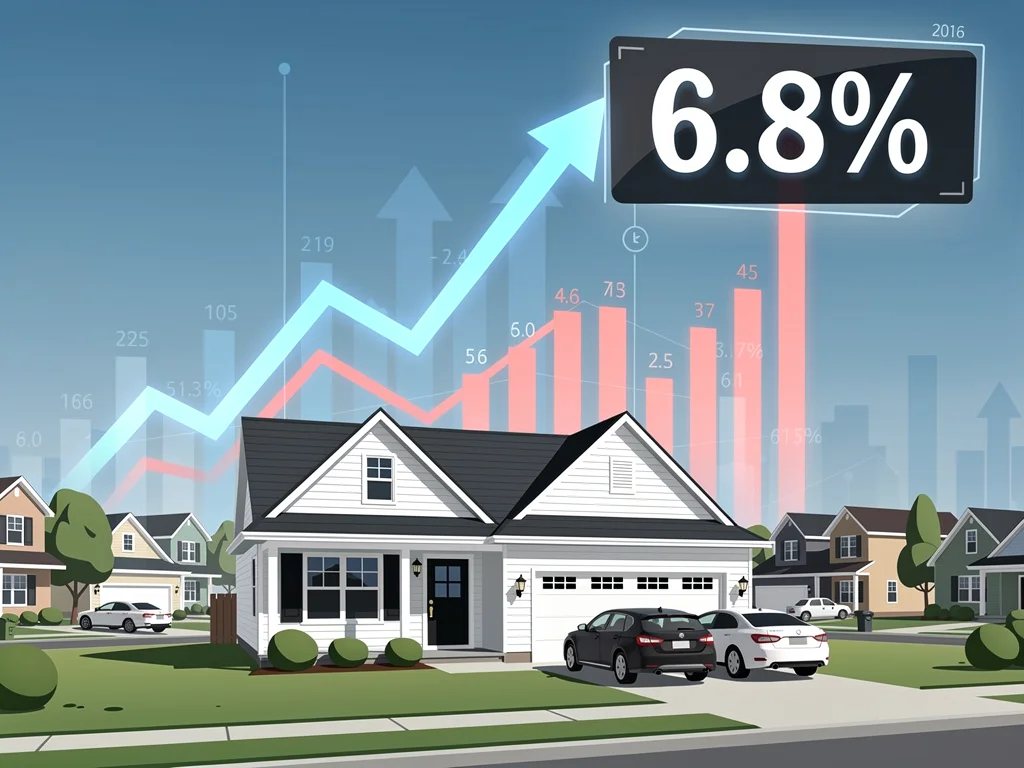
Understanding the projected 6.8% average for 2026 US mortgage rates is crucial for potential homebuyers, as it significantly impacts affordability, market dynamics, and strategic financial planning in the evolving housing landscape.
Por: Maria Eduarda em 6 de abril de 2026
Última atualização em: 13 de agosto de 2026
The projected 6.8% average for 2026 US mortgage rates signals a shift towards a more challenging affordability landscape for homebuyers, demanding meticulous financial planning and a strategic approach to real estate investments.
As we approach 2026, the housing market continues to evolve, presenting both opportunities and challenges for prospective homeowners. Understanding the implications of projected average rates is paramount. This article delves into 2026 US mortgage rates, specifically what a 6.8% average could signify for buyers across the United States.
Understanding the Economic Landscape Influencing 2026 Mortgage Rates
The trajectory of mortgage rates is intrinsically linked to broader economic forces. Anticipating a 6.8% average for 2026 requires a close look at the factors shaping the financial environment, from inflation to central bank policies. These elements collectively dictate the cost of borrowing, directly impacting the housing market.
Inflation remains a critical driver. When inflation is high, the Federal Reserve typically responds by raising the federal funds rate, which in turn influences the prime rate and subsequently, mortgage rates. Conversely, a cooling economy might lead to lower rates as policymakers aim to stimulate growth. The interplay of these forces creates a dynamic and often unpredictable market.
Key Economic Indicators to Monitor
Several economic indicators provide clues about where mortgage rates might be headed. Keeping an eye on these can help prospective buyers anticipate market shifts and plan accordingly.
Inflation Reports: Consumer Price Index (CPI) and Personal Consumption Expenditures (PCE) are crucial for gauging inflationary pressures.
Federal Reserve Announcements: Statements and decisions from the Federal Open Market Committee (FOMC) directly impact short-term interest rates, which often ripple through to long-term mortgage rates.
Employment Data: Strong job growth can signal a robust economy, potentially leading to higher rates, while a weakening job market might prompt rate cuts.
Furthermore, global economic stability plays a role. Geopolitical events, international trade agreements, and even currency fluctuations can indirectly affect the US bond market, which mortgage rates often track. A stable global environment generally fosters more predictable rate movements, whereas uncertainty can introduce volatility.
In essence, the 6.8% projection for 2026 US mortgage rates isn’t an isolated figure; it’s a reflection of complex economic forecasts. Buyers need to be aware of these underlying currents to make informed decisions. Understanding these economic drivers helps demystify why rates fluctuate and what might be expected in the coming years.
The Impact of a 6.8% Average Rate on Buyer Affordability
A 6.8% average mortgage rate in 2026 presents a significant shift in the landscape of home affordability. For many, this rate will translate into higher monthly payments, demanding a re-evaluation of budgets and housing expectations. The dream of homeownership remains, but the path to achieving it may require more strategic financial planning.
When interest rates rise, the total cost of a mortgage over its lifetime increases substantially, even if the purchase price of a home remains constant. This means that buyers will need to either qualify for a larger income, put down a larger down payment, or consider less expensive properties to keep their monthly payments within a comfortable range. The ripple effect extends to purchasing power, effectively reducing the amount a buyer can afford to borrow.
Calculating the Real Cost
To illustrate, consider a $400,000 home with a 20% down payment, resulting in a $320,000 loan. At a 6.8% interest rate over 30 years, the principal and interest payment would be significantly higher compared to a 5% rate. This difference can amount to hundreds of dollars per month, which accumulates to tens of thousands over the loan’s term.
Increased Monthly Payments: Higher rates directly translate to larger monthly outlays for principal and interest.
Reduced Purchasing Power: Buyers may need to lower their target home price to maintain manageable monthly payments.
Extended Savings Period: A larger down payment can help offset higher interest rates, but requires more time to save.
Moreover, affordability isn’t just about the mortgage payment. Property taxes, homeowners insurance, and potential HOA fees also contribute to the total housing expense. When mortgage rates are higher, these additional costs become even more burdensome, pushing the overall cost of homeownership beyond the reach of some prospective buyers. This scenario necessitates a holistic view of housing costs rather than focusing solely on the mortgage rate itself.
Ultimately, a 6.8% average rate for 2026 US mortgage rates will undoubtedly challenge affordability for many. It underscores the importance of thorough financial preparation, realistic budgeting, and potentially adjusting expectations regarding home size or location. Buyers who understand these implications early can better position themselves to navigate the market effectively.
Strategies for Buyers in a Higher Interest Rate Environment
Navigating a market with a 6.8% average mortgage rate requires a thoughtful and strategic approach. Buyers who are well-prepared can still achieve their homeownership goals, but it means adapting to the current financial climate. Proactive planning and exploring all available options will be key to success.
One primary strategy is to focus on strengthening personal finances. This includes improving credit scores, reducing existing debt, and increasing savings for a larger down payment. A higher credit score can qualify you for the best available rates, even within a generally elevated rate environment. A larger down payment reduces the loan amount, thereby mitigating the impact of higher interest rates on monthly payments.
Exploring Loan Options and Financial Tools
Not all mortgages are created equal, and understanding the different types available can be highly beneficial. Adjustable-Rate Mortgages (ARMs), for instance, might offer a lower initial rate than fixed-rate mortgages, which could be attractive for those planning to sell or refinance within a few years.
Fixed-Rate Mortgages: Provide stability with consistent monthly payments for the loan term, ideal for long-term predictability.
Adjustable-Rate Mortgages (ARMs): Offer lower initial rates that can fluctuate after an introductory period, suitable for short-term ownership or those expecting rates to drop.
Government-Backed Loans (FHA, VA, USDA): Often feature more lenient qualification requirements, lower down payments, and sometimes more competitive rates for eligible borrowers.
Another crucial strategy involves exploring lender options. Shopping around for the best rate and terms from multiple lenders can yield significant savings. Even a small difference in the interest rate can amount to thousands of dollars over the life of the loan. Utilising mortgage brokers can also be beneficial, as they have access to a wide range of lenders and can often find more favourable deals.
Additionally, consider the possibility of buying down the interest rate through mortgage points. While this requires an upfront cost, it can lower your monthly payments for the entire loan term, potentially saving you money in the long run. For buyers confronting 2026 US mortgage rates of 6.8%, these strategies are not just helpful; they are essential for making homeownership feasible and financially sound.
The Role of Refinancing and Market Fluctuations Post-2026
While the focus is on 2026 US mortgage rates averaging 6.8%, it’s important to look beyond that immediate horizon. Mortgage rates are not static; they fluctuate based on economic conditions, and what goes up can also come down. This means that for buyers entering the market at a higher rate, refinancing could become a viable option in the future.
Refinancing involves replacing your existing mortgage with a new one, often with a lower interest rate or different terms. If rates decline significantly after 2026, homeowners who locked in a 6.8% rate might have an opportunity to reduce their monthly payments or shorten their loan term. However, refinancing also comes with costs, including closing fees, so it’s crucial to weigh the potential savings against these expenses.
When to Consider Refinancing
The decision to refinance should be based on a careful analysis of market conditions and personal financial goals. Several factors typically signal a good time to consider refinancing:
Significant Rate Drop: If current rates are at least 0.75% to 1% lower than your existing mortgage rate.
Improved Credit Score: A higher credit score can qualify you for better refinancing terms.
Reduced Loan Term: Refinancing to a shorter term can save interest over the life of the loan, if the monthly payments remain affordable.
Market fluctuations are influenced by the same economic indicators that drive initial mortgage rates: inflation, Federal Reserve policy, and overall economic growth. A sustained period of economic stability and controlled inflation could lead to a more favourable rate environment. Conversely, unexpected economic shocks or persistent inflationary pressures could keep rates elevated or even push them higher.
Therefore, buyers should not view their initial mortgage rate as a permanent fixture. Staying informed about economic forecasts and market trends post-2026 will be essential for identifying potential refinancing opportunities. A proactive approach to monitoring these changes can lead to substantial long-term savings and increased financial flexibility.
Regional Variations in Housing Markets and Mortgage Impact
While a national average of 6.8% for 2026 US mortgage rates provides a general outlook, it’s crucial to recognise that the housing market is far from uniform. Regional variations in home prices, inventory, demand, and local economic conditions will significantly influence how this average rate impacts buyers across different parts of the United States. What might be a challenging environment in one city could be manageable in another.
For instance, high-cost-of-living areas, like major metropolitan hubs on the coasts, will feel the pinch of higher interest rates more acutely. In these regions, where home prices are already elevated, even a slight increase in mortgage rates can translate into significantly higher monthly payments, pushing homeownership further out of reach for many. Conversely, in more affordable markets, the impact might be less severe, allowing buyers more flexibility.
Factors Driving Regional Disparities
Several factors contribute to these regional differences, making a one-size-fits-all analysis insufficient:
Local Economic Health: Areas with robust job markets and population growth often see higher demand and prices.
Housing Supply: Regions with limited housing inventory tend to have higher prices and greater competition.
State and Local Regulations: Zoning laws, property taxes, and building codes can influence housing costs and availability.
Furthermore, local demographics and income levels play a role. In areas with lower average incomes, a 6.8% mortgage rate could create a much larger barrier to entry compared to regions with higher median household incomes. This disparity can exacerbate existing inequalities in homeownership rates across the country.
Buyers need to conduct thorough research on their specific local market conditions. This includes understanding average home prices, local inventory levels, and the competitive landscape. Consulting with local real estate agents and financial advisors who specialise in the region can provide invaluable insights tailored to specific circumstances. This localised perspective is vital for making informed decisions when facing national projections like the 2026 US mortgage rates.
Preparing for the Future: Long-Term Financial Planning
Anticipating 2026 US mortgage rates at an average of 6.8% underscores the importance of robust long-term financial planning for anyone considering homeownership. This isn’t just about securing a mortgage; it’s about building a stable financial foundation that can withstand market fluctuations and ensure sustained homeownership. A comprehensive approach involves more than just saving for a down payment.
One key aspect is establishing a substantial emergency fund. Unexpected home repairs, job loss, or medical emergencies can quickly derail financial stability, especially with higher mortgage payments. A fund covering at least three to six months of living expenses provides a critical safety net. This buffer allows homeowners to navigate unforeseen challenges without risking their most significant asset.
Key Components of Long-Term Financial Readiness
Beyond the emergency fund, several other elements contribute to long-term financial health for homeowners:
Debt Management: Prioritise paying down high-interest debt to free up cash flow and improve your debt-to-income ratio.
Credit Health: Continuously monitor and improve your credit score, as it impacts future refinancing opportunities and other financial products.
Investment Diversification: Explore various investment avenues beyond real estate to build wealth and provide alternative sources of capital if needed.
Moreover, understanding your long-term budget is crucial. This means accounting for not just mortgage payments, but also property taxes, insurance, maintenance costs, and potential home improvements. These recurring and sometimes unexpected expenses can significantly impact your monthly budget. Developing a realistic budget and sticking to it will be vital in a higher interest rate environment.
Finally, seeking professional financial advice can provide clarity and guidance. Financial planners can help assess your current situation, set realistic goals, and develop a personalised plan to achieve homeownership and maintain financial security in the long run. Their expertise can be invaluable in navigating the complexities of the housing market, especially when facing projected rates like the 6.8% average for 2026 US mortgage rates.
Key Aspect
Implication for Buyers
6.8% Average Rate
Higher monthly mortgage payments and reduced purchasing power for homebuyers.
Economic Influences
Inflation, Fed policy, and employment data drive rate changes; requires constant monitoring.
Buyer Strategies
Improve credit, save larger down payments, explore loan types, and shop multiple lenders.
Future Refinancing
Potential to lower rates post-2026 if market conditions improve; stay informed for opportunities.
Frequently Asked Questions About 2026 US Mortgage Rates
What factors are expected to influence 2026 US mortgage rates?▼
Key factors include inflation levels, the Federal Reserve’s monetary policy decisions, and overall economic growth and stability. Global economic events and employment data will also play a significant role in shaping the market.
How will a 6.8% average rate impact first-time homebuyers?▼
First-time homebuyers may face increased affordability challenges due to higher monthly payments and reduced purchasing power. Strategic financial planning, larger down payments, and exploring various loan options will be crucial for them.
Are there strategies to mitigate the impact of higher mortgage rates?▼
Yes, strategies include improving credit scores, saving for a larger down payment, comparing offers from multiple lenders, and exploring different mortgage products like ARMs or government-backed loans to find the best fit.
Could mortgage rates decrease after 2026?▼
Mortgage rates are dynamic and can decrease if economic conditions improve, such as a significant drop in inflation or a shift in the Federal Reserve’s policy towards lower interest rates. Refinancing opportunities may arise then.
How important is local market research when facing these rates?▼
Local market research is critically important. Regional variations in home prices, inventory, and economic conditions mean that a 6.8% national average will impact different areas differently, requiring tailored strategies for buyers.
Conclusion
The projected 6.8% average for 2026 US mortgage rates signals a challenging yet navigable landscape for prospective homebuyers. While affordability will undoubtedly be a primary concern, a proactive and informed approach can still lead to successful homeownership. Understanding economic drivers, employing smart financial strategies, and conducting thorough local market research will be paramount. By preparing diligently and staying abreast of market shifts, buyers can effectively adapt to these evolving conditions and make well-informed decisions for their financial future.
A journalism student and passionate about communication, she has been working as a content intern for 1 year and 3 months, producing creative and informative texts about decoration and construction. With an eye for detail and a focus on the reader, she writes with ease and clarity to help the public make more informed decisions in their daily lives.