Veterans’ Education Benefits 2026: GI Bill & Tuition Coverage
Veterans' education benefits for 2026 offer significant support, primarily through the Post-9/11 GI Bill, providing up to 100% tuition coverage for eligible service members, veterans, and their families, alongside other valuable programmes.
Por: [email protected] em 6 de maio de 2026
Última atualização em: 13 de agosto de 2026
The Post-9/11 GI Bill and other comprehensive programmes are pivotal for 2026 veterans’ education benefits, offering substantial financial assistance, including up to 100% tuition coverage, to facilitate academic and career advancement for service members and their dependants.
As we look towards 2026, understanding the landscape of veterans education benefits is paramount for service members, veterans, and their families contemplating higher education or vocational training. The opportunities available can be life-changing, offering pathways to new careers and personal growth. This guide will meticulously compare the flagship Post-9/11 GI Bill with other significant programmes, ensuring you have a comprehensive understanding of how to maximise your tuition coverage and achieve your educational aspirations.
Understanding the Post-9/11 GI Bill in 2026
The Post-9/11 GI Bill remains the cornerstone of education benefits for eligible service members and veterans. Enacted to provide robust support for those who served after 10 September 2001, its provisions cover tuition, housing, books, and supplies, making higher education significantly more accessible. For 2026, the core structure is expected to remain largely consistent, offering a clear framework for beneficiaries.
Eligibility for the Post-9/11 GI Bill hinges primarily on the length of active-duty service after 10 September 2001. Those with at least 90 aggregate days of active duty, or those honourably discharged with a service-connected disability after 30 continuous days, generally qualify. The percentage of benefits received is directly correlated with the length of service, with a minimum of 36 months of service typically granting 100% of the maximum benefit.
Eligibility criteria and benefit tiers
The Post-9/11 GI Bill operates on a tiered system, meaning the amount of benefit you receive depends on how long you served on active duty. This structure ensures that those with longer periods of service receive the most comprehensive support, recognising their greater contributions.
100% Benefit Level: Requires at least 36 months of active duty service, or 30 continuous days with an honourable discharge due to a service-connected disability.
90% Benefit Level: Requires at least 30 but less than 36 months of active duty service.
80% Benefit Level: Requires at least 24 but less than 30 months of active duty service.
70% Benefit Level: Requires at least 18 but less than 24 months of active duty service.
Understanding your specific tier is crucial for financial planning. The maximum benefit covers 100% of in-state public school tuition and fees, or a national maximum for private and foreign schools. Furthermore, a monthly housing allowance (MHA) and an annual books and supplies stipend are also provided, significantly easing the financial burden of education.
The Post-9/11 GI Bill’s comprehensive nature makes it an incredibly attractive option for veterans pursuing diverse educational paths. Its robust financial support covers not just tuition but also living expenses and educational materials, creating a holistic package designed to foster academic success and smooth transitions into civilian life.
Comparing the Montgomery GI Bill (MGIB-AD and MGIB-SR)
While the Post-9/11 GI Bill is often the first benefit veterans consider, the Montgomery GI Bill (MGIB) offers alternative pathways for educational funding, particularly for those who served before 11 September 2001, or in the Reserves. It comprises two main programmes: MGIB-Active Duty (MGIB-AD) and MGIB-Selected Reserve (MGIB-SR), each with distinct eligibility criteria and benefits. It’s important to evaluate which programme best suits your service history and educational goals.
The MGIB-AD, often referred to as Chapter 30, provides up to 36 months of education benefits. Eligibility generally requires having entered active duty after 30 June 1985, serving for a minimum period (typically two to three years), and contributing $100 per month for the first 12 months of service. Unlike the Post-9/11 GI Bill, MGIB-AD pays a fixed monthly amount directly to the veteran, who is then responsible for tuition, fees, and other educational costs. This direct payment model offers flexibility but requires careful budgeting.
Key differences in payment structure and eligibility
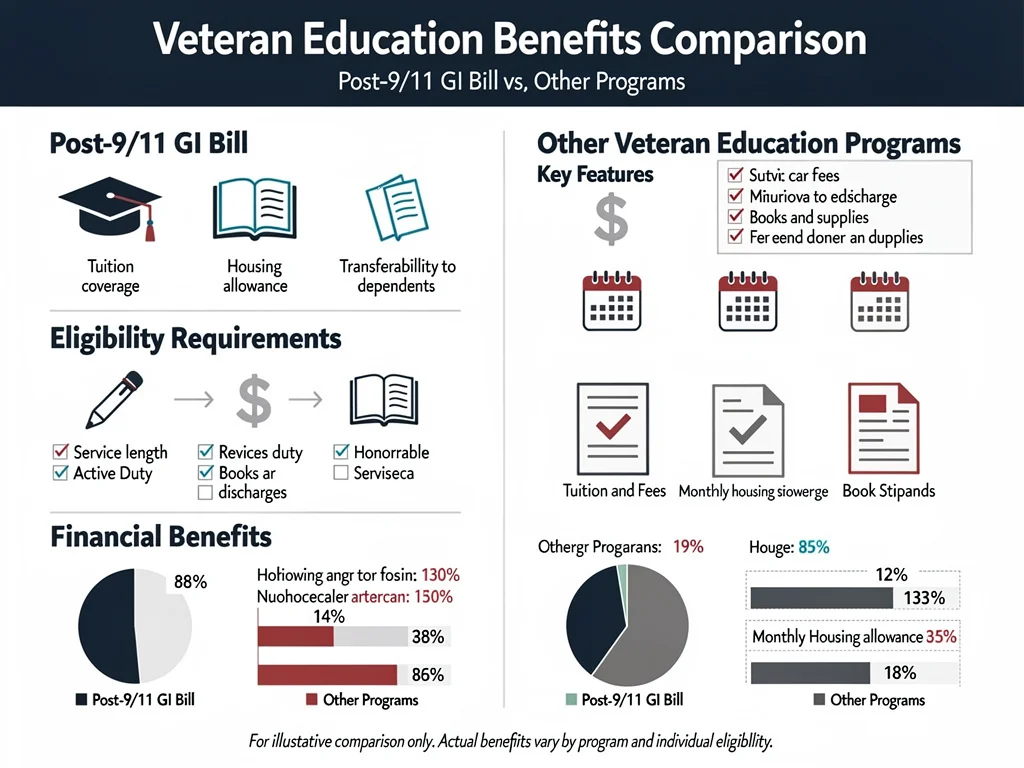
The fundamental difference between the MGIB-AD and the Post-9/11 GI Bill lies in their payment structures. MGIB-AD offers a monthly stipend, whereas the Post-9/11 GI Bill directly pays tuition to the school, provides a housing allowance, and a books stipend. This distinction is vital when planning your educational finances.
MGIB-AD: Fixed monthly payment to the veteran; veteran responsible for all educational costs. Eligibility requires a $1,200 contribution.
Post-9/11 GI Bill: Direct tuition payment to the school; monthly housing allowance; annual books and supplies stipend. No contribution required.
The MGIB-Selected Reserve (MGIB-SR), or Chapter 1606, is designed for members of the Army, Navy, Air Force, Marine Corps, and Coast Guard Reserves, as well as the Army National Guard and Air National Guard. Eligibility typically requires a six-year service obligation in the Selected Reserve and completion of initial active duty for training. Similar to MGIB-AD, MGIB-SR provides a fixed monthly payment for educational expenses, but the amount is generally lower. This benefit aims to support reservists in their pursuit of education while balancing their military commitments.
Choosing between the Post-9/11 GI Bill and the MGIB programmes often depends on individual circumstances, such as service dates, length of service, and financial needs. It is possible to be eligible for both, but generally, one must make an irrevocable election between the two, highlighting the importance of understanding each programme’s nuances before making a decision.
The Yellow Ribbon Programme: Expanding Tuition Coverage
Even with the generous provisions of the Post-9/11 GI Bill, there can be gaps, particularly for veterans attending private institutions or out-of-state public universities where tuition and fees exceed the national maximum benefit. This is where the Yellow Ribbon Programme becomes a critical component of maximising tuition coverage. The programme is a voluntary agreement between the Department of Veterans Affairs (VA) and participating educational institutions, offering supplemental funding to eligible Post-9/11 GI Bill beneficiaries.
Essentially, the Yellow Ribbon Programme helps bridge the gap between the Post-9/11 GI Bill’s tuition coverage and the actual cost of tuition and fees at participating schools. Institutions voluntarily enter into agreements with the VA to fund a certain amount of veterans’ unmet tuition and fees, and the VA matches that amount. This can significantly reduce or even eliminate out-of-pocket expenses for eligible veterans, making more expensive educational options financially viable.
How the Yellow Ribbon Programme works
For a veteran to be eligible for the Yellow Ribbon Programme, they must be 100% eligible for the Post-9/11 GI Bill. This typically means having served at least 36 months on active duty or having been discharged due to a service-connected disability after 30 days of continuous service. The programme is not automatically applied; veterans must apply directly to their chosen participating school.
School Participation: Institutions decide whether to participate, how many students to fund, and the maximum contribution amount.
VA Match: The VA matches the school’s contribution, effectively doubling the supplemental funding.
Eligibility: Only 100% Post-9/11 GI Bill eligible beneficiaries can use the Yellow Ribbon Programme.
It’s vital for prospective students to research which schools participate in the Yellow Ribbon Programme and what their specific contributions are. The VA maintains a comprehensive list of participating institutions, which can be an invaluable resource when making educational choices. The programme’s impact is profound, allowing veterans to access top-tier private education or out-of-state public programmes without incurring substantial debt.
In essence, the Yellow Ribbon Programme acts as a vital supplement, extending the reach of the Post-9/11 GI Bill to cover costs that would otherwise be prohibitive. Its voluntary nature means that availability and amounts can vary, necessitating thorough research by the veteran. However, for those who qualify, it represents a significant opportunity to achieve their educational goals without financial compromise.
Vocational Rehabilitation and Employment (VR&E – Chapter 31)
For veterans with service-connected disabilities, the Vocational Rehabilitation and Employment (VR&E) programme, also known as Chapter 31, offers a unique and comprehensive pathway to employment and independent living. This programme is distinct from the GI Bill benefits as it focuses specifically on assisting veterans whose disabilities present barriers to employment. VR&E provides a wide array of services, including vocational counselling, job search assistance, and, crucially, funding for education and training.
Eligibility for VR&E requires a service-connected disability rating of at least 10% from the VA and an employment handicap. An employment handicap means that the disability impairs the veteran’s ability to obtain or maintain employment commensurate with their abilities. Once deemed eligible, veterans work with a VR&E counsellor to develop an individualised rehabilitation plan (IRP) tailored to their specific needs and career goals.
Comprehensive support beyond tuition
The VR&E programme stands out for its holistic approach to veteran support. While it can cover the full cost of tuition, fees, books, and supplies, its benefits extend far beyond mere financial assistance, aiming for successful long-term employment outcomes.
Vocational Counselling: Personalised guidance to identify suitable career paths and educational programmes.
Education and Training: Full funding for approved degree programmes, vocational training, and apprenticeships.
Special Employer Incentives: Financial incentives for employers who hire veterans with service-connected disabilities.
The IRP developed with a VR&E counsellor outlines the specific services and support a veteran will receive. This might include assistance with adaptive equipment, prosthetics, or even independent living services, all designed to facilitate the veteran’s journey towards suitable employment. The programme’s focus on rehabilitation and re-employment makes it an invaluable resource for disabled veterans seeking to reintegrate into the civilian workforce.
Unlike the GI Bill, which has a finite period of eligibility, VR&E typically offers services for up to 48 months, though extensions can be granted based on individual circumstances and the complexity of the rehabilitation plan. Its tailored approach and comprehensive support make it an essential programme for veterans navigating the challenges of service-connected disabilities and career transitions.
State-Specific Veterans’ Education Benefits
Beyond the federal programmes, many U.S. states offer their own unique education benefits for veterans, often designed to complement or supplement federal aid. These state-specific programmes can vary widely in scope, eligibility, and the types of benefits provided, ranging from tuition waivers at public institutions to scholarships and grants. It is crucial for veterans to investigate the specific offerings in their state of residence, as these can significantly enhance their overall educational funding.
These state benefits are typically administered by state departments of veterans affairs or higher education agencies. Eligibility often depends on factors such as residency, length of service, discharge status, and whether the veteran served during specific periods of conflict. Some states also extend benefits to dependants of veterans, particularly those of deceased or disabled service members, further broadening the impact of these programmes.
Examples of state-level support
The diversity of state-level benefits means that what’s available in one state might be entirely different in another. However, common types of support include tuition waivers, fee exemptions, and direct financial aid. These can be particularly beneficial for veterans attending state universities or community colleges, where federal benefits might not cover all costs.
Tuition Waivers: Many states offer full or partial tuition waivers at public colleges and universities for eligible veterans.
Grants and Scholarships: Specific state-funded grants or scholarships tailored for veterans and their dependants.
Residency Preferences: Some states offer in-state tuition rates to veterans, regardless of their prior residency, upon establishing a presence in the state.
Dependant Benefits: Education benefits extended to spouses and children of deceased or 100% disabled veterans.
For instance, states like Texas offer the Hazlewood Act, providing up to 150 credit hours of tuition exemption at public institutions for eligible veterans and their dependants. California has various fee waivers and grants through its Department of Veterans Affairs. Each state has its own unique set of programmes, and researching these can uncover additional funding opportunities that may not be available through federal channels alone.
It is highly recommended that veterans contact their state’s Department of Veterans Affairs or a veterans’ benefits counsellor to understand the full spectrum of state-specific educational aid available. Combining federal and state benefits strategically can lead to comprehensive tuition coverage and minimise out-of-pocket expenses, making educational pursuits more attainable.
Maximising Your Education Benefits: Strategies for 2026
Navigating the various veterans’ education benefits can be complex, but with careful planning and an understanding of the available options, veterans can maximise their tuition coverage and achieve their academic and career goals. The key lies in understanding eligibility for each programme, strategic application, and continuous monitoring of changes in legislation or programme offerings that may occur by 2026.
One of the most critical steps is to thoroughly assess your individual service history and educational aspirations. This assessment will help determine which federal and state programmes you are eligible for. For many, the Post-9/11 GI Bill offers the most comprehensive benefits, but for others, particularly those with service-connected disabilities or specific service dates, the Montgomery GI Bill or VR&E might be more advantageous. Never assume; always verify your eligibility for all potential programmes.
Key strategies for optimal benefit utilisation
To ensure you get the most out of your veteran education benefits, consider these strategic approaches. A proactive and informed stance can make a significant difference in your educational journey and financial well-being.
Compare Programmes Thoroughly: Understand the nuances of the Post-9/11 GI Bill, MGIB-AD, MGIB-SR, and VR&E. If eligible for multiple, weigh the pros and cons carefully, as choosing one may preclude another.
Research Yellow Ribbon Schools: If attending a private or out-of-state public institution, actively seek out schools participating in the Yellow Ribbon Programme to minimise tuition gaps.
Explore State Benefits: Contact your state’s veterans affairs office to uncover additional tuition waivers, grants, or scholarships. These can often be stacked with federal benefits.
Utilise VR&E for Disabilities: If you have a service-connected disability, explore VR&E. Its comprehensive support extends beyond tuition to include vocational counselling and job placement.
Plan Your Education Path: Choose a programme of study that aligns with your career goals. Benefits are generally for approved programmes, so ensure your chosen path is covered.
Furthermore, staying informed about potential legislative changes is important. While the core benefits are stable, amendments can occur, impacting eligibility or benefit amounts. Regularly checking the VA’s official website and consulting with veterans’ educational counsellors can provide up-to-date information. Understanding the application process for each benefit is also crucial; gather all necessary documentation well in advance to avoid delays.
Ultimately, maximising your education benefits involves a combination of research, strategic decision-making, and proactive engagement with the resources available. The goal is to leverage these hard-earned benefits to their fullest potential, facilitating a successful transition into civilian education and employment.
Future Outlook and Potential Changes for 2026
The landscape of veterans’ education benefits is dynamic, often influenced by evolving national priorities, economic conditions, and the needs of the veteran community. While the core tenets of programmes like the Post-9/11 GI Bill are expected to remain stable for 2026, it is prudent to consider potential adjustments or enhancements that might be on the horizon. Legislative bodies continuously review and refine these benefits to ensure they remain relevant and effective in supporting those who have served.
One area of ongoing discussion often revolves around the cost of living and the adequacy of housing allowances, particularly in high-cost-of-living areas. While the Post-9/11 GI Bill’s Monthly Housing Allowance (MHA) is tied to the Basic Allowance for Housing (BAH) for an E-5 with dependants, adjustments might be considered to better reflect current economic realities. Similarly, there could be discussions around expanding eligibility for certain programmes or streamlining application processes to reduce administrative burdens on veterans.
Anticipated trends and policy considerations
Several trends and policy considerations could shape veterans’ education benefits in 2026. These are often driven by advocacy groups, veteran feedback, and governmental reviews, aiming to improve the overall efficacy and reach of these vital programmes.
Enhanced Support for STEM Fields: Continued emphasis on encouraging veterans to pursue degrees in Science, Technology, Engineering, and Mathematics (STEM) through additional benefits or incentives.
Flexibility for Non-Traditional Learning: Potential expansion of benefits to cover more non-traditional educational pathways, such as coding boot camps, micro-credentials, or online-only programmes, reflecting changes in the job market.
Mental Health and Academic Support Integration: Increased integration of mental health services and academic support programmes alongside financial benefits to address the holistic needs of veteran students.
Dependant Benefits Review: Possible re-evaluation of benefits for spouses and children, ensuring robust support for military families.
The role of technology in delivering and managing benefits is also likely to evolve. The VA continues to invest in digital platforms to make applications, benefit tracking, and communication more efficient. By 2026, we could see even more sophisticated online tools designed to simplify the veteran’s journey through the education system. Furthermore, ongoing efforts to prevent fraud and ensure responsible use of taxpayer funds will likely lead to continuous refinement of oversight mechanisms.
Veterans and their advocates should remain vigilant and engaged with legislative updates. While significant overhauls are rare, incremental changes can have a substantial impact on individual benefits. Staying informed through official VA channels, veterans’ service organizations, and educational institutions will be key to adapting to any potential shifts and ensuring maximum utilisation of available resources in 2026 and beyond.
Key Programme
Brief Description
Post-9/11 GI Bill
Covers tuition, housing, books for post-9/11 service. Tiered benefits up to 100% based on active duty length.
Montgomery GI Bill (MGIB)
Fixed monthly payment to veteran for education costs. Includes Active Duty (MGIB-AD) and Selected Reserve (MGIB-SR).
Yellow Ribbon Programme
Supplements Post-9/11 GI Bill for private or out-of-state tuition exceeding national maximums at participating schools.
Voc Rehab & Employment (VR&E)
Comprehensive support for veterans with service-connected disabilities to achieve employment goals, including education funding.
Frequently Asked Questions About Veterans’ Education Benefits
What is the primary difference between the Post-9/11 GI Bill and the Montgomery GI Bill?▼
The Post-9/11 GI Bill pays tuition directly to the institution and provides a housing allowance and books stipend. In contrast, the Montgomery GI Bill (MGIB) provides a fixed monthly payment directly to the veteran, who is then responsible for managing all educational expenses, offering different financial flexibility.
Who is eligible for 100% of the Post-9/11 GI Bill benefits?▼
Veterans who have served at least 36 months on active duty after 10 September 2001, or those honourably discharged with a service-connected disability after 30 continuous days of service, are typically eligible for 100% of the Post-9/11 GI Bill benefits, covering maximum tuition and fees.
Can I use the Yellow Ribbon Programme with the Montgomery GI Bill?▼
No, the Yellow Ribbon Programme is exclusively available to veterans who are 100% eligible for the Post-9/11 GI Bill. It is designed to supplement the Post-9/11 GI Bill’s tuition coverage for private or out-of-state public schools where costs exceed federal maximums.
What unique benefits does Vocational Rehabilitation and Employment (VR&E) offer?▼
VR&E (Chapter 31) provides comprehensive support for veterans with service-connected disabilities, including vocational counselling, job search assistance, and full funding for education and training, all tailored to overcome employment handicaps and achieve career goals.
How can state-specific education benefits complement federal programmes?▼
State-specific benefits, such as tuition waivers or grants, can significantly complement federal programmes by covering costs not fully met by the GI Bill, especially at public institutions. Veterans should research their state’s Department of Veterans Affairs for additional opportunities.
Conclusion
The array of veterans’ education benefits available for 2026 represents a profound commitment to those who have served, offering diverse pathways to academic and professional success. From the comprehensive coverage of the Post-9/11 GI Bill and its Yellow Ribbon Programme supplement to the flexible stipends of the Montgomery GI Bill and the tailored support of Vocational Rehabilitation and Employment, veterans have numerous resources at their disposal. Additionally, state-specific programmes often provide crucial supplementary aid, making higher education and vocational training more accessible than ever. Understanding the nuances of each benefit, assessing individual eligibility, and proactively engaging with available resources are key steps in maximising these invaluable opportunities, ensuring that service members and veterans can confidently pursue their educational aspirations and transition successfully into civilian life.
I'm a journalist with a passion for creating engaging content. My goal is to empower readers with the knowledge they need to make informed decisions and achieve their goals.