Unlock 2026 Social Security Benefits: Maximise Your Claim by 15%
Advertisements
A 5-step guide to maximising your 2026 Social Security benefits by up to 15% involves understanding eligibility, strategic claiming, and leveraging delayed retirement credits and spousal benefits.
Are you looking to enhance your future financial security? Understanding how to strategically approach your Social Security benefits is paramount. This comprehensive guide will walk you through a 5-step process for Unlocking Your 2026 Social Security Benefits: A 5-Step Guide to Maximising Your Claim by 15%, ensuring you make informed decisions that could significantly boost your retirement income.
Understanding Your Full Retirement Age (FRA)
Your Full Retirement Age (FRA) is a critical factor in determining your Social Security benefit amount. It represents the age at which you are entitled to receive 100% of your primary insurance amount (PIA). Claiming benefits before your FRA will result in a permanent reduction, while delaying beyond it can lead to increased payments.
For those born in 1960 or later, your FRA is 67. Understanding this specific age is the foundational first step in any strategy to maximise your benefits. It dictates the baseline from which all other claiming decisions are made, directly influencing the potential for a 15% increase or more.
Calculating Your Primary Insurance Amount (PIA)
Your Primary Insurance Amount (PIA) is the benefit you would receive if you start collecting Social Security at your full retirement age. The Social Security Administration (SSA) calculates your PIA based on your highest 35 years of indexed earnings. It’s not a simple average, but a weighted formula designed to provide a higher replacement rate for lower earners.
- Earnings Record Review: Regularly check your Social Security earnings record for accuracy. Errors can significantly impact your PIA.
- Indexed Earnings: The SSA adjusts your past earnings to account for changes in average wages over time, ensuring your benefits reflect your lifetime contributions fairly.
- Benefit Calculation: The PIA is determined by applying a formula to your average indexed monthly earnings (AIME).
Impact of Early vs. Delayed Claiming on FRA
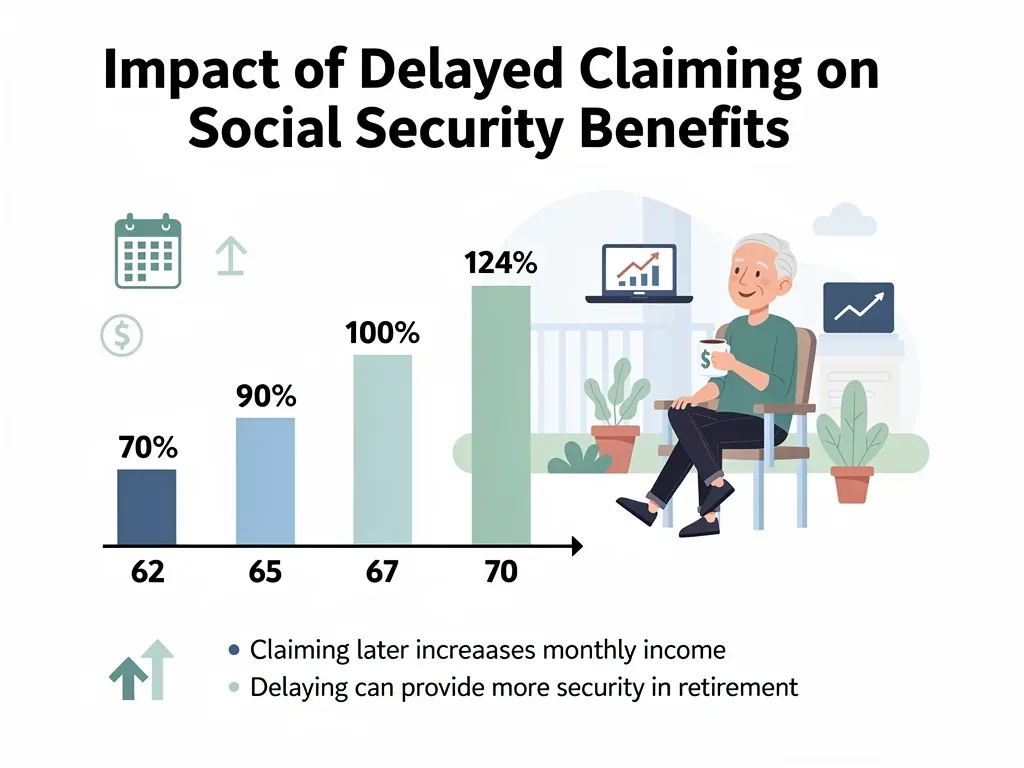
Claiming benefits early, as soon as age 62, can reduce your monthly payment by up to 30% compared to your FRA benefit. Conversely, delaying beyond your FRA can increase your benefit by 8% per year up to age 70. This creates a powerful incentive for strategic planning.
The difference between claiming at 62 and 70 can be substantial, often representing hundreds of pounds per month. This long-term financial impact underscores the importance of carefully considering your claiming age in relation to your FRA and overall financial health. The decision should align with your personal circumstances and financial goals.
Strategic Claiming: The Power of Delay
Delaying your Social Security claim can be one of the most effective ways to significantly boost your monthly benefits. For each year you delay claiming past your Full Retirement Age (FRA), up to age 70, you earn Delayed Retirement Credits (DRCs). These credits permanently increase your monthly benefit by 8% per year. This means that by waiting from age 67 to 70, you could increase your benefit by 24%.
This strategy is particularly beneficial for individuals who are in good health, have other sources of income to cover expenses in their early retirement years, or those who simply enjoy working. The compounding effect of these credits can lead to a much more comfortable retirement, making a significant difference over the course of your retirement years. It’s a strategic move that can provide a substantial return on investment.
Understanding Delayed Retirement Credits (DRCs)
Delayed Retirement Credits are a crucial component of maximising your Social Security. They represent an 8% annual increase in your benefit amount for each year you postpone claiming past your FRA, up to age 70. These credits are applied automatically by the Social Security Administration.
- Annual Increase: Each year of delay adds 8% to your primary insurance amount.
- Permanent Boost: Once earned, these credits are a permanent addition to your monthly benefit for the rest of your life.
- Maximum Age: DRCs stop accruing at age 70, so there’s no additional benefit to delaying past this point.
When Delaying Makes Sense for You
Delaying your claim isn’t for everyone, but it offers substantial advantages for many. Consider delaying if you are in good health and have a family history of longevity, as you will likely collect benefits for a longer period. If you have sufficient savings or can continue working, delaying allows your benefits to grow without immediate financial pressure.
Furthermore, if you are the higher earner in a married couple, delaying your claim not only maximises your own benefit but also potentially increases the survivor benefit for your spouse. This dual advantage makes delaying a powerful tool for comprehensive retirement planning, offering peace of mind and greater financial security for both partners.
Coordinating Spousal and Survivor Benefits
For married couples, optimising Social Security benefits extends beyond individual claiming decisions. Strategic coordination of spousal and survivor benefits can significantly increase the total household income in retirement. Spousal benefits allow one spouse to claim up to 50% of the other spouse’s Full Retirement Age (FRA) benefit, provided certain conditions are met.
Survivor benefits are equally important, ensuring financial security for the surviving spouse after one partner passes away. Understanding how these benefits interact and planning their timing can prevent leaving money on the table. It requires careful consideration of both spouses’ earnings records, ages, and life expectancies to formulate the most advantageous claiming strategy.
Spousal Benefit Rules and Eligibility
Spousal benefits are available to married individuals whose spouse is already receiving Social Security retirement or disability benefits. To be eligible, you must be at least 62 years old, or any age if caring for a child under 16 or disabled. The maximum spousal benefit is 50% of your spouse’s primary insurance amount (PIA).
- Claiming Age: Claiming spousal benefits before your own FRA will result in a reduced amount.
- Your Own Benefit: If you are eligible for your own Social Security benefit, you will generally receive the higher of your own benefit or the spousal benefit.
- Divorced Spouses: Even divorced individuals may be eligible for spousal benefits if the marriage lasted at least 10 years and they meet other criteria.
Maximising Survivor Benefits
Survivor benefits provide crucial financial support to a surviving spouse or dependent children after the death of a worker. The amount of the survivor benefit depends on the deceased worker’s earnings record and the survivor’s age at the time of claiming. A surviving spouse can receive up to 100% of the deceased worker’s benefit if they claim at their own FRA.
Strategic claiming for survivor benefits often involves careful timing. For example, a surviving spouse might claim their own reduced benefit early and then switch to a higher survivor benefit at their FRA, or vice-versa, depending on which benefit is larger. This requires detailed planning and understanding of the rules to ensure the maximum possible income stream.
Considering Work During Retirement
Working during retirement can significantly impact your Social Security benefits, especially if you claim before your Full Retirement Age (FRA). The Social Security Administration (SSA) has earnings limits that, if exceeded, can lead to a temporary reduction in your benefits. However, these reductions are not permanent; they are eventually credited back to you in the form of higher future benefits once you reach your FRA.
Beyond the direct impact on benefits, working in retirement offers several advantages. It can provide additional income, allowing you to delay claiming Social Security and earn more Delayed Retirement Credits. It also offers mental and social engagement, which are valuable aspects of a fulfilling retirement. Understanding these dynamics is key to integrating work into your overall retirement strategy effectively.
Earnings Limits and Benefit Reductions
If you work and claim Social Security benefits before your FRA, your benefits may be reduced if your earnings exceed certain limits. For 2024, if you are under FRA for the entire year, the SSA deducts £1 from your benefits for every £2 you earn above the annual limit (e.g., £22,320). In the year you reach FRA, the deduction is £1 for every £3 earned above a different, higher limit (e.g., £59,520) until the month you reach FRA.
Once you reach your FRA, these earnings limits no longer apply, and you can earn as much as you want without your Social Security benefits being reduced. The benefits that were withheld due to these earnings limits are not lost; they are factored back into your benefit calculation at your FRA, resulting in a higher monthly payment for the rest of your life.
Benefits of Continued Employment
Continuing to work, even part-time, offers a multitude of benefits beyond just increasing your Social Security payments. Financially, it provides an additional income stream, which can reduce the need to draw down retirement savings prematurely, thus allowing those savings more time to grow. It also allows you to potentially delay claiming Social Security, leading to higher monthly benefits later on.
- Increased Savings: Working longer can boost your retirement savings, providing a larger nest egg.
- Delayed Claiming: Postponing your Social Security claim leads to higher monthly payments.
- Health Benefits: Many studies suggest that continued engagement in work can have positive impacts on mental and physical health.
- Social Engagement: Work provides opportunities for social interaction and a sense of purpose, which are vital for well-being.
Navigating Cost-of-Living Adjustments (COLAs)
Cost-of-Living Adjustments (COLAs) are an essential feature of Social Security, designed to ensure that the purchasing power of your benefits keeps pace with inflation. These annual adjustments are based on the Consumer Price Index for Urban Wage Earners and Clerical Workers (CPI-W). When the CPI-W increases, so do Social Security benefits, helping retirees maintain their standard of living.
Understanding how COLAs work is crucial for long-term financial planning. While COLAs are not guaranteed to occur every year, they have been a regular feature of Social Security benefits for decades. They play a significant role in preserving the value of your retirement income, especially during periods of higher inflation. Staying informed about COLA announcements can help you better forecast your future income.

How COLAs Are Calculated
The Social Security Administration calculates COLAs by comparing the average CPI-W for the third quarter of the current year with the average for the third quarter of the last year a COLA was enacted. If there is an increase, the percentage difference becomes the COLA for the following year. This calculation ensures that benefits reflect changes in the cost of living.
For example, if the CPI-W average for July, August, and September of 2025 is higher than the average for the same period in 2024, a COLA will be applied to benefits starting in January 2026. This mechanism provides a vital safeguard against inflation, protecting the real value of your Social Security income over time and allowing you to maintain your purchasing power.
Impact of Inflation on Benefits
Inflation can significantly erode the purchasing power of fixed incomes, making COLAs particularly important for Social Security recipients. Without COLAs, the money received each month would gradually buy less and less over time, severely impacting retirees’ financial stability. COLAs act as a buffer, ensuring that benefits keep pace with rising prices for everyday goods and services.
While COLAs are designed to mitigate the effects of inflation, it is important to note that they may not always perfectly reflect every individual’s personal cost of living. However, they provide a critical adjustment that helps millions of beneficiaries maintain their financial well-being, making them a cornerstone of Social Security’s long-term value proposition for retirees.
Seeking Professional Financial Advice
Navigating the complexities of Social Security benefits can be challenging, and making optimal decisions often requires expert guidance. Seeking professional financial advice is a crucial step in ensuring you maximise your benefits and align your Social Security strategy with your overall retirement goals. A qualified financial advisor can provide personalised insights tailored to your unique circumstances.
They can help you understand the intricate rules, evaluate different claiming scenarios, and integrate your Social Security plan with other retirement assets, such as pensions, 401(k)s, and IRAs. This holistic approach can uncover opportunities for benefit maximisation that you might otherwise overlook, potentially adding thousands of pounds to your retirement income over time.
When to Consult a Financial Advisor
It is advisable to consult a financial advisor well before you plan to claim Social Security, ideally in your late 50s or early 60s. This gives you ample time to explore all options, understand the long-term implications of various claiming strategies, and make adjustments to your financial plan if necessary. Proactive planning is key to securing the best possible outcomes.
- Complex Situations: If you have a complex financial situation, such as significant assets, multiple income sources, or unique family circumstances.
- Uncertainty: When you are unsure about the best claiming age or how different strategies will impact your overall retirement income.
- Spousal/Survivor Benefits: If you need help coordinating benefits with a spouse or understanding survivor benefit rules.
- Tax Implications: For guidance on how Social Security benefits are taxed and how to minimise your tax liability.
Questions to Ask Your Advisor
When meeting with a financial advisor, come prepared with a list of specific questions to ensure you get the most out of the consultation. Focus on questions that address your unique situation and concerns. This proactive approach will help you gain clarity and confidence in your Social Security claiming decisions.
Ask about their experience with Social Security planning, their fee structure, and how they approach benefit maximisation for clients. Inquire about specific strategies relevant to your age, marital status, and health. A good advisor will provide clear, data-driven answers and help you develop a robust, personalised plan that aligns with your retirement aspirations.
| Key Strategy | Brief Description |
|---|---|
| Understand FRA | Know your Full Retirement Age (FRA) to avoid benefit reductions and plan delays effectively. |
| Delay Claiming | Earn 8% annual Delayed Retirement Credits by waiting until age 70 for higher payments. |
| Coordinate Spousal Benefits | Married couples should strategise to maximise combined benefits, including survivor options. |
| Seek Expert Advice | Consult a financial advisor for personalised strategies and comprehensive retirement planning. |
Frequently Asked Questions About Maximising Social Security
What is the ideal age to claim Social Security for maximum benefits?▼The ideal age to claim for maximum personal benefits is generally 70, as Delayed Retirement Credits stop accruing then. This strategy can increase your monthly payment significantly compared to claiming at your Full Retirement Age (FRA) or earlier.
Can working in retirement affect my Social Security benefits?▼Yes, if you work and claim benefits before your Full Retirement Age (FRA), your benefits may be temporarily reduced if your earnings exceed specific annual limits. However, these withheld benefits are eventually returned to you in the form of higher payments at your FRA.
How do spousal benefits work, and how can they be maximised?▼Spousal benefits allow you to claim up to 50% of your spouse’s Full Retirement Age (FRA) benefit. Maximisation often involves strategic timing, ensuring the higher earner delays their claim to boost both their own and potential spousal/survivor benefits.
What are Cost-of-Living Adjustments (COLAs), and how do they impact my benefits?▼COLAs are annual adjustments to Social Security benefits designed to counteract inflation, based on the Consumer Price Index. They help maintain your purchasing power, ensuring your benefits keep pace with the rising cost of living over time.
Is professional financial advice necessary for Social Security planning?▼While not strictly necessary for everyone, professional financial advice is highly recommended. An advisor can provide personalised strategies, navigate complex rules, and integrate Social Security into your broader retirement plan for optimal results, potentially increasing your overall income.
Conclusion
Navigating the intricacies of Social Security benefits requires careful planning and informed decision-making to truly maximise your retirement income. By understanding your Full Retirement Age, strategically delaying your claim, coordinating spousal and survivor benefits, considering the impact of working in retirement, and appreciating the role of Cost-of-Living Adjustments, you can build a robust strategy. The goal is not merely to claim benefits, but to unlock their full potential, potentially increasing your monthly payments by a significant margin. Seeking expert financial advice further refines this process, ensuring your Social Security strategy aligns perfectly with your long-term financial aspirations and provides the secure, comfortable retirement you deserve.