EPA Emissions Standards: 25% Reduction by 2030
The Environmental Protection Agency (EPA) has announced new, stricter emissions standards for industrial facilities across the United States, aiming for a substantial 25% reduction in harmful pollutants by 2030.
In a move poised to reshape the industrial landscape of the United States, the Environmental Protection Agency (EPA) has unveiled groundbreaking, stricter EPA emissions standards for industrial facilities. This ambitious initiative targets a significant 25% reduction in various pollutants by the year 2030, marking a pivotal moment in the nation’s ongoing efforts to combat climate change and improve public health. This announcement signals a strengthened commitment to environmental stewardship, demanding significant shifts in operational practices across numerous sectors. What do these new regulations entail for businesses and the environment?
Understanding the New EPA Emissions Standards
The recently announced EPA emissions standards represent a comprehensive overhaul of existing regulations, designed to tackle a broader spectrum of pollutants from industrial sources. These standards are not merely an incremental adjustment but a strategic tightening intended to accelerate the transition towards a cleaner, more sustainable industrial economy. The EPA’s objective is clear: to mitigate the environmental impact of industrial operations while fostering innovation in green technologies.
Key Pollutants Targeted
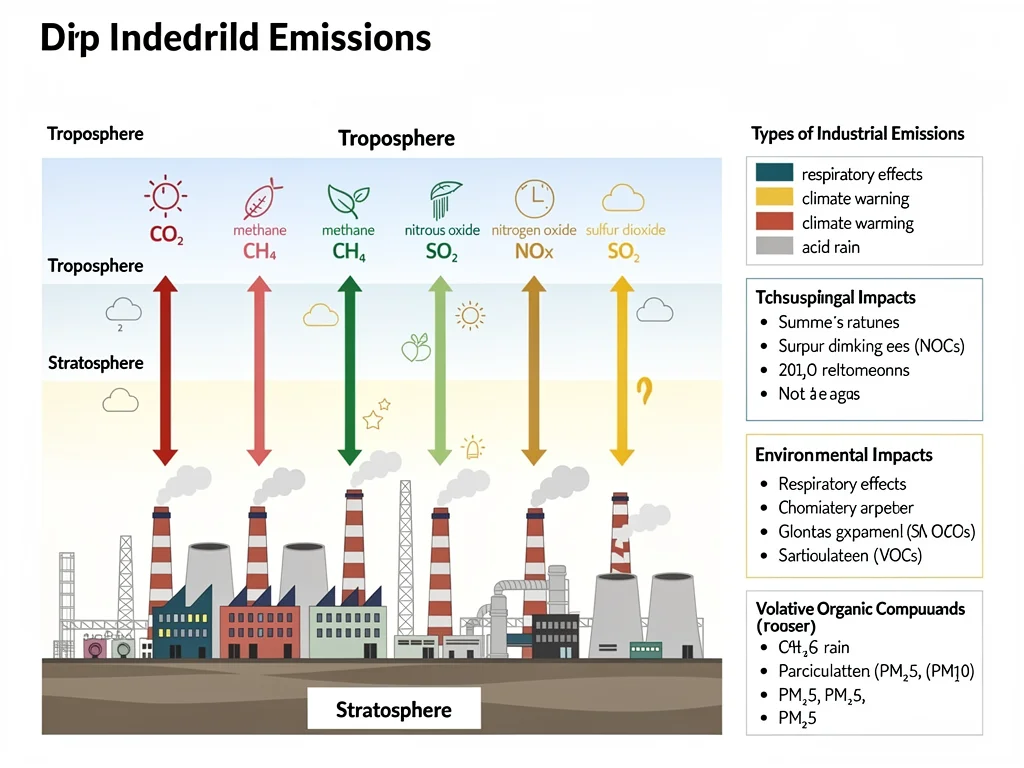
The new regulations specifically target several key pollutants that have significant adverse effects on both human health and the environment. These include greenhouse gases, particulate matter, and various volatile organic compounds. Reducing these substances is crucial for improving air quality, curbing climate change, and protecting ecosystems. The EPA has identified these as priority areas based on extensive scientific research and public health data.
- Greenhouse Gases (GHGs): Primarily carbon dioxide (CO2) and methane, contributing to global warming.
- Particulate Matter (PM2.5): Microscopic solid or liquid particles that can penetrate deep into the lungs, causing respiratory and cardiovascular issues.
- Sulphur Dioxide (SO2) and Nitrogen Oxides (NOx): Precursors to acid rain and smog, impacting air quality and natural environments.
- Volatile Organic Compounds (VOCs): Organic chemicals that can react with nitrogen oxides in the presence of sunlight to form ground-level ozone, a harmful air pollutant.
The focus on these specific pollutants underscores the EPA’s commitment to a holistic approach to environmental protection. By targeting a diverse range of emissions, the agency aims to achieve multiple environmental and health benefits simultaneously. This integrated strategy is expected to yield more significant positive outcomes compared to piecemeal regulatory adjustments.
The new standards are a direct response to growing concerns over climate change and the persistent challenges posed by industrial pollution. They build upon previous environmental legislation but introduce more stringent requirements and a clearer timeline for compliance. This proactive stance by the EPA reflects a global trend towards stricter environmental governance and corporate accountability.
In essence, these new EPA emissions standards are a robust framework designed to drive substantial environmental improvements over the next decade. They set a high bar for industrial facilities, encouraging them to adopt cleaner production methods and invest in advanced pollution control technologies. The success of these standards will hinge on effective implementation and continuous monitoring.
Implications for Industrial Facilities
The introduction of these stricter EPA emissions standards will undoubtedly present both challenges and opportunities for industrial facilities across the United States. Businesses will need to re-evaluate their current operational models, invest in new technologies, and potentially adapt their entire supply chains to meet the 2030 reduction targets. This will necessitate significant capital expenditure for many companies, particularly those in energy-intensive sectors.
Technological Upgrades and Innovation
A primary implication is the strong impetus for technological upgrades. Many facilities will need to install state-of-the-art pollution control equipment, such as advanced scrubbers, catalytic converters, and carbon capture technologies. This demand for new solutions is expected to spur innovation within the environmental technology sector, creating new markets and jobs. Companies that embrace these changes early may gain a competitive advantage.
Furthermore, there will be a greater emphasis on process optimization to reduce emissions at the source, rather than solely relying on end-of-pipe solutions. This could involve shifting to cleaner energy sources, improving energy efficiency, and redesigning manufacturing processes to minimise waste and emissions. The long-term benefits of such investments could include reduced operating costs and enhanced corporate reputation.
Economic and Competitive Landscape Shifts
- Increased Compliance Costs: Initial investments in new equipment and process changes will be substantial for many businesses.
- Potential for Green Job Creation: Growth in environmental technology and consulting sectors.
- Competitive Advantage for Early Adopters: Companies that proactively meet standards may attract environmentally conscious consumers and investors.
- Supply Chain Reassessment: Businesses may need to scrutinise their suppliers’ environmental performance to ensure overall compliance.
These shifts will not be uniform across all industries. Sectors such as power generation, heavy manufacturing, and chemical production are likely to face the most significant impacts due to their inherently high emission profiles. However, even smaller industrial players will need to assess their compliance obligations and plan accordingly. The EPA has indicated that support and guidance will be provided, but the onus remains on facilities to adapt.
Ultimately, these new EPA emissions standards are set to drive a substantial transformation within the industrial sector. While the initial investment and effort may be considerable, the long-term benefits, including improved public health, a cleaner environment, and a more sustainable economy, are expected to outweigh the costs. Forward-thinking companies will view these regulations not as a burden, but as a catalyst for innovation and sustainable growth.
The Environmental and Public Health Benefits
The primary motivation behind the stricter EPA emissions standards is to deliver tangible environmental and public health benefits. By mandating a 25% reduction in industrial emissions by 2030, the EPA aims to significantly improve air and water quality, mitigate the impacts of climate change, and reduce the incidence of pollution-related diseases. This ambitious target reflects a strong commitment to safeguarding the well-being of American communities and natural ecosystems.
Cleaner Air and Water
Reducing particulate matter, sulphur dioxide, and nitrogen oxides will lead to dramatically cleaner air, especially in areas historically burdened by industrial pollution. This will translate into fewer respiratory illnesses, such as asthma and bronchitis, and a decrease in cardiovascular problems. Cleaner air also means less smog, improving visibility and enhancing the quality of outdoor life. The benefits extend beyond human health, supporting healthier plant life and reducing damage to infrastructure caused by air pollutants.
Furthermore, controlling emissions often has a direct positive impact on water quality. Many air pollutants eventually settle into water bodies, contributing to acidification and eutrophication. By reducing these atmospheric inputs, the new standards will help protect aquatic ecosystems, supporting biodiversity and ensuring safer drinking water sources. This integrated approach highlights the interconnectedness of environmental systems.
Combating Climate Change
- Reduced Greenhouse Gas Concentrations: Directly addresses the root causes of global warming.
- Slower Rate of Climate Change: Contributes to slowing down temperature increases and extreme weather events.
- International Leadership: Positions the US as a leader in global climate action efforts.
- Preservation of Natural Habitats: Helps protect vulnerable ecosystems from climate-induced degradation.
The 25% reduction target for greenhouse gases is particularly crucial in the fight against climate change. Lowering industrial CO2 and methane emissions will contribute significantly to national and international climate goals, helping to limit global temperature rise. This will have far-reaching benefits, from reducing the frequency and intensity of extreme weather events to protecting coastal communities from rising sea levels. The economic costs associated with climate change impacts are immense, making these preventative measures economically prudent.
The long-term health and environmental benefits of these stricter standards are projected to be substantial, far outweighing the implementation costs. By prioritising clean air, clean water, and a stable climate, the EPA is investing in a healthier, more resilient future for all Americans. These regulations underscore the intrinsic link between environmental protection and societal well-being.
Enforcement and Compliance Mechanisms
Effective enforcement and robust compliance mechanisms are critical to the success of the new EPA emissions standards. The EPA is not just setting targets; it is also putting in place a framework to ensure that industrial facilities adhere to the regulations and achieve the mandated 25% reduction by 2030. This involves a combination of monitoring, reporting, and, where necessary, punitive measures.
Monitoring and Reporting Requirements
Industrial facilities will be required to implement enhanced monitoring systems to accurately track their emissions. This includes continuous emissions monitoring systems (CEMS) for major pollutants, as well as regular reporting to the EPA. The data collected will be crucial for assessing progress towards the 2030 target and identifying areas where further action is needed. Transparency in reporting will also allow for public scrutiny and accountability.
The EPA will leverage advanced data analytics and remote sensing technologies to verify reported data and detect potential non-compliance. This technological approach aims to make enforcement more efficient and effective, reducing the scope for misreporting or evasion. Facilities must ensure their internal data management systems are robust and capable of meeting these stringent reporting demands.

Penalties for Non-Compliance
- Financial Penalties: Significant fines can be levied for violations, proportionate to the severity and duration of non-compliance.
- Legal Action: The EPA can pursue civil and criminal charges against facilities and individuals found to be in egregious violation of the standards.
- Operational Restrictions: Non-compliant facilities may face limitations on their operating permits or even temporary shutdowns.
- Public Disclosure: Violations can be publicly disclosed, leading to reputational damage and loss of consumer trust.
To encourage compliance, the EPA will utilise a range of enforcement tools. Facilities that fail to meet the new standards or do not comply with reporting requirements could face substantial penalties. These sanctions are designed to act as a strong deterrent, ensuring that the economic incentive to comply outweighs the cost of non-compliance. The agency is also expected to offer guidance and technical assistance to help facilities navigate the new regulatory landscape, particularly for small and medium-sized enterprises.
The enforcement strategy for these EPA emissions standards is designed to be firm yet fair, ensuring that all industrial facilities play their part in achieving the national environmental goals. A consistent and transparent enforcement regime will build trust and confidence in the regulatory process, ultimately contributing to the successful implementation of the 2030 reduction target.
Economic Opportunities and Green Innovation
While the stricter EPA emissions standards present regulatory challenges, they also unlock significant economic opportunities and foster green innovation. The demand for new technologies, services, and expertise to meet the 25% reduction target will stimulate growth in various sectors, creating a robust green economy. This paradigm shift encourages businesses to view environmental compliance not as a cost centre, but as a driver for competitive advantage and long-term sustainability.
Growth in Green Technology Sector
The increased need for advanced pollution control systems, renewable energy solutions, and energy-efficient processes will fuel the expansion of the green technology sector. Companies specialising in carbon capture, waste-to-energy systems, industrial efficiency software, and sustainable materials will likely experience a surge in demand. This will lead to increased investment in research and development, accelerating the pace of innovation.
Furthermore, consulting services focused on environmental compliance, sustainability strategy, and carbon accounting will become highly sought after. This creates opportunities for specialised firms and professionals to assist industrial facilities in navigating the complex regulatory landscape and implementing effective emission reduction strategies. The expertise required for these transformations is significant and will drive job creation.
Competitive Edge Through Sustainability
- Enhanced Brand Reputation: Demonstrating commitment to environmental responsibility can attract consumers and investors.
- Access to Green Financing: Financial institutions are increasingly offering favourable terms for sustainable projects.
- Operational Efficiencies: Investments in energy efficiency and waste reduction often lead to lower operating costs in the long run.
- Market Differentiation: Companies with strong environmental performance can distinguish themselves in competitive markets.
For industrial facilities, embracing these new standards can lead to a significant competitive advantage. Companies that proactively invest in sustainable practices and cleaner production methods can enhance their brand reputation, attract environmentally conscious consumers, and access green financing options. Sustainability is increasingly becoming a key factor for investors and stakeholders, making strong environmental performance a valuable asset.
Moreover, the drive for efficiency to reduce emissions often results in operational cost savings. For example, optimising energy use not only lowers greenhouse gas emissions but also reduces utility bills. Similarly, minimising waste generation can lead to reduced raw material costs and disposal fees. These tangible economic benefits reinforce the business case for adopting greener practices.
In essence, the EPA emissions standards are acting as a powerful catalyst for economic transformation. They are pushing industries towards a more sustainable and innovative future, where environmental responsibility and economic prosperity are not mutually exclusive but are, in fact, deeply intertwined. This shift promises a more resilient and future-proof industrial sector for the United States.
International Context and Global Climate Action
The EPA’s announcement of stricter emissions standards for industrial facilities is not an isolated domestic policy; it is deeply embedded within a broader international context of global climate action. As nations worldwide grapple with the urgent challenge of climate change, the United States’ commitment to a 25% reduction by 2030 sends a powerful signal to the international community. This move reinforces the country’s dedication to its commitments under international agreements and positions it as a leader in environmental stewardship.
Alignment with Paris Agreement Goals
The new EPA emissions standards align directly with the objectives of the Paris Agreement, an international treaty on climate change adopted by 196 Parties at COP 21 in Paris, on 12 December 2015. The agreement aims to limit global warming to well below 2, preferably to 1.5 degrees Celsius, compared to pre-industrial levels. By setting ambitious domestic targets for industrial emissions, the US is demonstrating its contribution to these global efforts. This strengthens diplomatic ties and encourages other major economies to follow suit with their own stringent policies.
Furthermore, the US action can serve as a blueprint or inspiration for other nations, particularly developing economies, seeking to balance industrial growth with environmental protection. Sharing expertise and technological advancements in emission reduction strategies can accelerate global progress towards a sustainable future. The collaborative aspect of global climate action is paramount, and national policies like these are foundational.
Global Competitiveness and Green Trade
- Influencing Global Standards: US leadership can help shape international environmental benchmarks.
- Promoting Green Technologies Exports: US innovation in clean tech can become a valuable export commodity.
- Avoiding Carbon Tariffs: Strong domestic policies can help industries navigate potential future international carbon border adjustments.
- Enhanced International Reputation: Strengthens the US’s standing as a responsible global actor.
In an increasingly interconnected global economy, environmental policies can also impact international trade and competitiveness. Countries with lax environmental regulations may face scrutiny or even trade barriers in the future, as nations look to prevent ‘carbon leakage’ – where industries move to countries with weaker environmental controls. By proactively implementing stricter standards, US industries can maintain their competitive edge in a global market that is increasingly valuing sustainability.
The development and deployment of advanced green technologies within the US, driven by these new standards, also create opportunities for the export of these innovations. American companies that develop effective solutions for emissions reduction can find new markets abroad, contributing to both economic growth and global environmental improvement. This dual benefit underscores the strategic importance of the EPA’s recent announcement within the broader context of global climate action and economic diplomacy.
Challenges and Criticisms of the New Standards
While the new EPA emissions standards are widely lauded by environmental groups and public health advocates, they are not without their challenges and criticisms. Implementing such far-reaching regulations across a diverse industrial landscape will inevitably encounter hurdles, ranging from economic concerns to logistical complexities. Understanding these potential obstacles is crucial for a balanced perspective on the policy’s future.
Economic Burden and Job Concerns
One of the primary criticisms often levelled against stricter environmental regulations is the potential economic burden on industries. Opponents argue that the significant capital investments required for technological upgrades and compliance could lead to increased production costs, which might be passed on to consumers or result in reduced profitability for businesses. There are also concerns about job losses in traditional, high-emission industries that may struggle to adapt or become less competitive.
Some industry associations and business leaders have voiced worries that these standards could put American companies at a disadvantage compared to international competitors operating under less stringent environmental rules. They advocate for a more gradual approach or for greater financial incentives to assist industries in making the transition, fearing that an overly aggressive timeline could stifle economic growth and innovation rather than promote it.
Technical Feasibility and Implementation Hurdles
- Availability of Proven Technologies: Concerns about whether cost-effective, scalable technologies are readily available for all types of industrial emissions.
- Infrastructure Gaps: The need for significant upgrades to energy grids and transportation infrastructure to support cleaner industrial processes.
- Permitting and Regulatory Delays: The complex process of obtaining permits for new equipment and modifications can cause delays.
- Data Collection and Verification: Challenges in accurately monitoring and reporting emissions across thousands of diverse facilities.
Beyond economic concerns, technical feasibility and implementation present their own set of challenges. Critics question whether the necessary technologies for a 25% reduction are sufficiently mature and scalable for all industrial applications within the given timeframe. The diversity of industrial processes means that a one-size-fits-all approach to emissions reduction is unlikely to be effective, requiring tailored solutions that may not yet exist or are prohibitively expensive.
Moreover, the administrative burden on both the EPA and regulated facilities could be substantial. Ensuring consistent enforcement, providing adequate technical assistance, and processing numerous compliance plans will require significant resources. Navigating the permitting process for new equipment and infrastructure modifications can also be a lengthy and complex endeavour, potentially delaying progress towards the 2030 target.
Despite these criticisms, proponents argue that the long-term benefits of climate action and improved public health far outweigh these short-term challenges. They also point to historical precedents where industries have successfully adapted to new environmental regulations, often leading to unforeseen innovations and efficiencies. The debate highlights the complex balance between environmental protection, economic viability, and technological readiness that policy makers must continually address.
| Key Aspect | Brief Description |
|---|---|
| Target Reduction | 25% reduction in industrial emissions by 2030. |
| Key Pollutants | Greenhouse gases, particulate matter, SO2, NOx, VOCs. |
| Economic Impact | Drives green tech innovation and new job creation, but requires significant industrial investment. |
| Enforcement | Enhanced monitoring, reporting, and penalties for non-compliance. |
Frequently asked questions about EPA emissions standards
The primary goals are to achieve a 25% reduction in industrial emissions by 2030, significantly improve air and water quality, and mitigate the impacts of climate change. These standards aim to protect public health and foster a more sustainable industrial sector through stringent regulations and technological advancement.
Sectors such as power generation, heavy manufacturing, and chemical production are expected to be most significantly affected. These industries typically have higher emission profiles and will require substantial investments in new technologies and operational changes to meet the stricter targets set by the EPA.
Facilities are expected to adopt advanced pollution control equipment like carbon capture systems, advanced scrubbers, and catalytic converters. There will also be a push towards cleaner energy sources, improved energy efficiency, and process optimisation to reduce emissions at the source, driving green innovation.
Compliance will be ensured through enhanced monitoring systems, including continuous emissions monitoring and regular reporting requirements. The EPA will also utilise data analytics and remote sensing, coupled with financial penalties, legal action, and potential operational restrictions for facilities that fail to meet the new standards.
The standards are expected to stimulate growth in the green technology sector, create new jobs, and offer a competitive advantage for early adopters. Companies can also achieve operational efficiencies through energy conservation and waste reduction, enhancing brand reputation and attracting green financing opportunities in the long term.
Conclusion
The EPA’s announcement of stricter emissions standards for industrial facilities, targeting a 25% reduction by 2030, marks a definitive step towards a cleaner, more sustainable future for the United States. This comprehensive regulatory update addresses critical environmental challenges, from improving air and water quality to combating climate change, and is poised to yield significant public health benefits. While industrial sectors face the imperative of substantial investment in technological upgrades and operational adjustments, these new standards simultaneously catalyse green innovation and foster economic opportunities within the burgeoning environmental technology sector. The strategic alignment with global climate action goals further solidifies the US’s commitment on the international stage. Despite potential economic burdens and implementation complexities, the long-term advantages of a healthier environment and a more resilient economy underscore the profound importance of these ambitious EPA emissions standards. Their successful implementation will undoubtedly reshape American industry, paving the way for a more environmentally responsible and economically vibrant future.
Related Posts: