US Debt Ceiling Debate 2026: Financial Market Implications
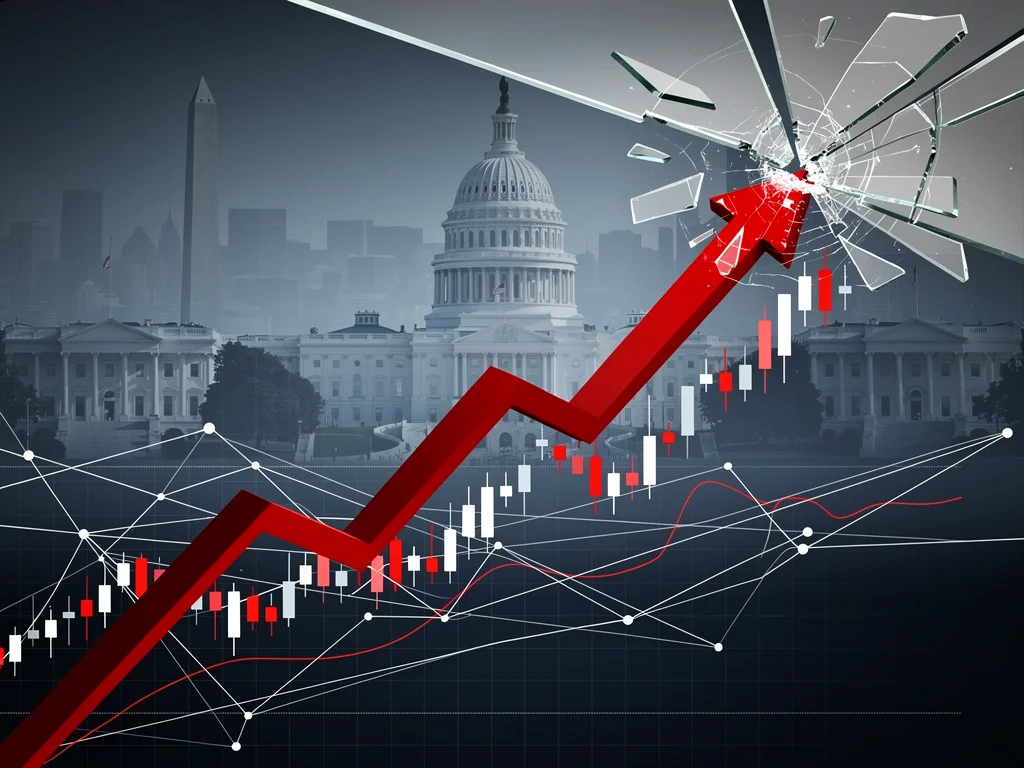
The US debt ceiling debate significantly influences 2026 financial markets, potentially causing volatility, impacting interest rates, and affecting investor confidence, with implications for global economic stability.
Por: Maria Eduarda em 31 de julho de 2026
Última atualização em: 13 de agosto de 2026
The US debt ceiling debate critically influences 2026 financial markets by creating economic uncertainty, potentially leading to increased market volatility, higher borrowing costs, and a significant erosion of investor confidence, impacting both domestic and international financial stability.
Understanding the US Debt Ceiling Debate: Implications for 2026 Financial Markets is crucial for investors, policymakers, and everyday citizens alike. As the United States approaches future fiscal deadlines, the recurring spectacle of the debt ceiling debate casts a long shadow over economic stability, with potential ramifications that extend far beyond Washington D.C.’s political corridors.
The Mechanics of the US Debt Ceiling: A Primer
To truly grasp the potential implications for 2026 financial markets, we must first understand what the US debt ceiling actually is and how it functions. It is not, as some might assume, a limit on future spending, but rather a cap on the total amount of money the United States government can borrow to meet its existing legal obligations.
These obligations include payments for Social Security and Medicare benefits, military salaries, interest on the national debt, tax refunds, and other outlays that Congress has already authorised. Essentially, the debt ceiling is a legislative constraint that forces Congress to periodically approve the government’s ability to pay for bills it has already incurred.
Historical Context and Evolution
The concept of a debt ceiling dates back to 1917, established to provide greater flexibility during World War I. Before this, Congress had to approve each individual bond issuance. The debt ceiling streamlined this process, allowing the Treasury to issue debt as needed, as long as the total remained below the statutory limit. Over the decades, it has evolved into a powerful, albeit often disruptive, political tool.
Early Purpose: To simplify government borrowing during wartime.
Evolution: From a procedural mechanism to a significant political bargaining chip.
Frequency of Adjustments: The ceiling has been raised or suspended numerous times throughout history to accommodate increased government spending and national debt.
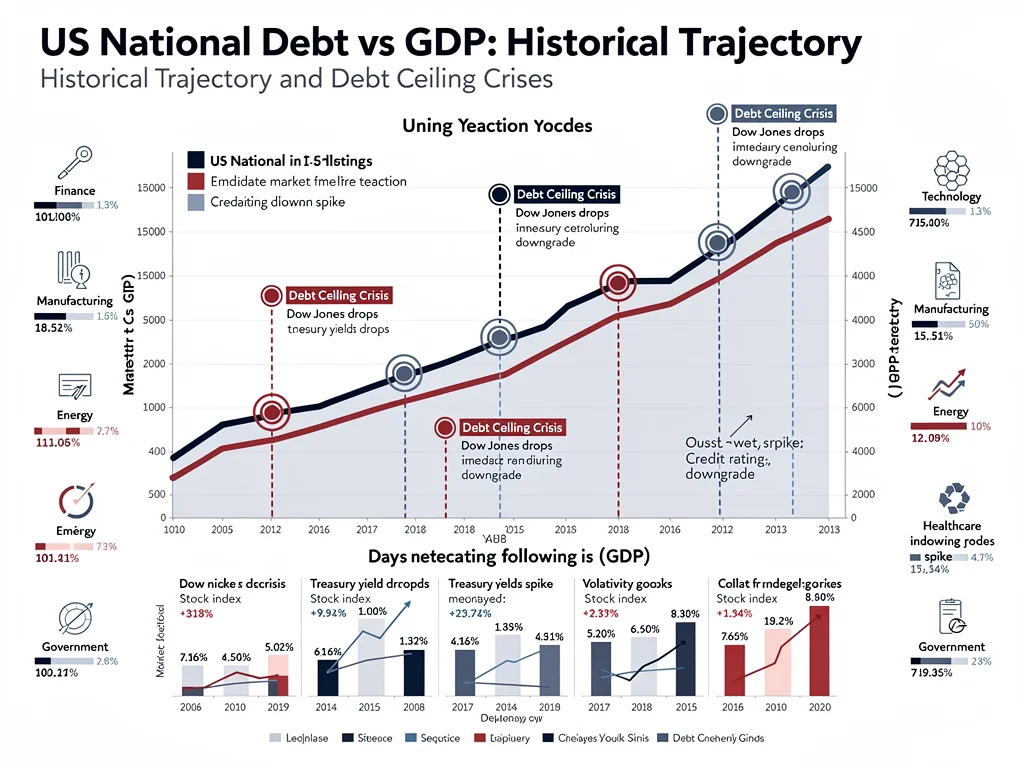
The modern era has seen the debt ceiling transformed into a recurring flashpoint for partisan battles over fiscal policy. Each time the nation approaches the limit, the debate intensifies, creating uncertainty that can ripple through global financial systems. Understanding this historical context is vital for anticipating future market reactions.
In essence, the debt ceiling represents a unique challenge in fiscal governance. It’s a self-imposed constraint that, if not addressed, can lead to unprecedented economic turmoil, even though the underlying spending decisions have already been made and approved by Congress.
The Immediate Economic Impact of a Debt Ceiling Standoff
When a debt ceiling standoff occurs, the immediate economic fallout can be swift and severe. The primary concern is the potential for the US government to default on its obligations, even if temporarily. This is not merely a theoretical risk; past impasses have brought the nation perilously close to this scenario, triggering significant market anxiety.
A failure to raise or suspend the debt ceiling in time would mean the Treasury Department could not issue new debt to pay its bills. This would force the government to prioritise payments, a process fraught with legal and economic complexities, or, more likely, delay payments. The implications of such a scenario are profound and far-reaching.
Market Volatility and Investor Confidence
One of the most observable immediate impacts is heightened market volatility. Stock markets tend to react negatively to uncertainty, and a potential US default is arguably the ultimate uncertainty. Investors become risk-averse, leading to sell-offs in equities and a flight to perceived safety, though even traditionally safe assets like US Treasuries can see their appeal diminish under such circumstances.
Stock Market Declines: Broad market indices often experience sharp drops as investors anticipate economic disruption.
Increased Bond Yields: Even if Treasuries are still considered safe, the perceived risk of default can push their yields higher, increasing government borrowing costs.
Erosion of Confidence: Investor confidence, both domestic and international, takes a significant hit, making future investment decisions more cautious.
The ripple effects extend beyond direct financial markets. Businesses may delay investment and hiring decisions due to the uncertain economic outlook, potentially slowing economic growth. Consumers, too, might become more cautious with their spending, further dampening economic activity. The very threat of a default, even if averted at the last minute, can inflict real economic damage through lost confidence and increased borrowing costs.
Therefore, any prolonged debate approaching the debt ceiling deadline invariably creates a climate of anxiety. This economic tension underscores why resolving these impasses quickly is paramount for maintaining stability and preventing unnecessary financial market disruptions.
Potential Implications for 2026 Financial Markets
Looking ahead to 2026, the recurring nature of the debt ceiling debate suggests that future impasses could have even more pronounced effects, especially as global economic conditions evolve. The financial markets operate on confidence and predictability, both of which are severely undermined by debt ceiling brinkmanship.
By 2026, the global financial landscape may present new challenges or vulnerabilities that could amplify the impact of a US debt ceiling crisis. For instance, if global growth is already slowing, or if other geopolitical tensions are high, a domestic US fiscal crisis could trigger a more severe worldwide downturn than seen in previous episodes.
Interest Rates and Borrowing Costs
A primary concern for 2026 is the potential for significantly higher interest rates. If investors perceive an increased risk of default, even a remote one, they will demand higher yields on US Treasury bonds. This translates directly into higher borrowing costs for the US government, exacerbating the national debt problem.
Government Borrowing: Higher yields mean more taxpayer money goes towards servicing debt, potentially crowding out other essential spending.
Corporate Borrowing: Treasury yields serve as a benchmark for other interest rates. Higher government borrowing costs typically lead to higher rates for corporations and consumers, impacting business investment and consumer spending.
Mortgage Rates: Homebuyers could face higher mortgage rates, making housing less affordable and potentially slowing the real estate market.
Beyond direct interest rate impacts, the credibility of US Treasury bonds as the world’s safest asset could be permanently damaged. This would have profound implications for the global financial architecture, where Treasuries underpin countless financial transactions and serve as a reserve asset for central banks worldwide. The long-term erosion of this trust could lead to a fundamental re-evaluation of global financial strategies.
Thus, the 2026 debt ceiling debate could be more than just a temporary market blip; it could be a catalyst for sustained shifts in global capital flows and investment patterns, with lasting consequences for economic growth and stability.
Sector-Specific Vulnerabilities and Opportunities
While a debt ceiling crisis impacts the entire economy, certain sectors may experience disproportionate effects, both negative and, in some rare cases, potentially positive for very specific types of investors. Understanding these sector-specific vulnerabilities and opportunities is key for navigating the financial landscape in 2026.
Sectors heavily reliant on government contracts or direct government payments, such as defence, healthcare providers (especially those serving Medicare/Medicaid patients), and infrastructure companies, face immediate payment risks. Delays in government payments could strain their cash flow, leading to operational difficulties and potential layoffs.
Financial Services and Technology
The financial services sector is particularly vulnerable due to increased market volatility and potential disruptions in credit markets. Banks and investment firms could face reduced trading volumes, increased counterparty risk, and a general slowdown in financial activity. However, some areas, like distressed asset management or certain types of hedging strategies, might see increased activity.
Banking: Increased risk of loan defaults, reduced lending activity, and potential liquidity issues.
Investment Firms: Higher volatility creates both risks and opportunities for skilled traders, but overall market uncertainty can deter long-term investments.
Insurance: Exposure to market downturns through investment portfolios; potential for increased claims if economic hardship leads to more insured events.
The technology sector, while often seen as resilient, is not immune. A general economic slowdown would reduce consumer and business spending on new technologies, impacting sales and growth prospects. Companies reliant on venture capital funding might also find it harder to secure investments during periods of high economic uncertainty. Conversely, firms offering cost-saving or efficiency-enhancing solutions might see increased demand as businesses seek to cut expenses.
Investors should carefully evaluate their portfolios for exposure to these vulnerable sectors and consider diversification strategies. While broad market downturns affect nearly all assets, understanding where the sharpest impacts might occur can help in mitigating losses or identifying niche opportunities.
Global Repercussions and International Confidence
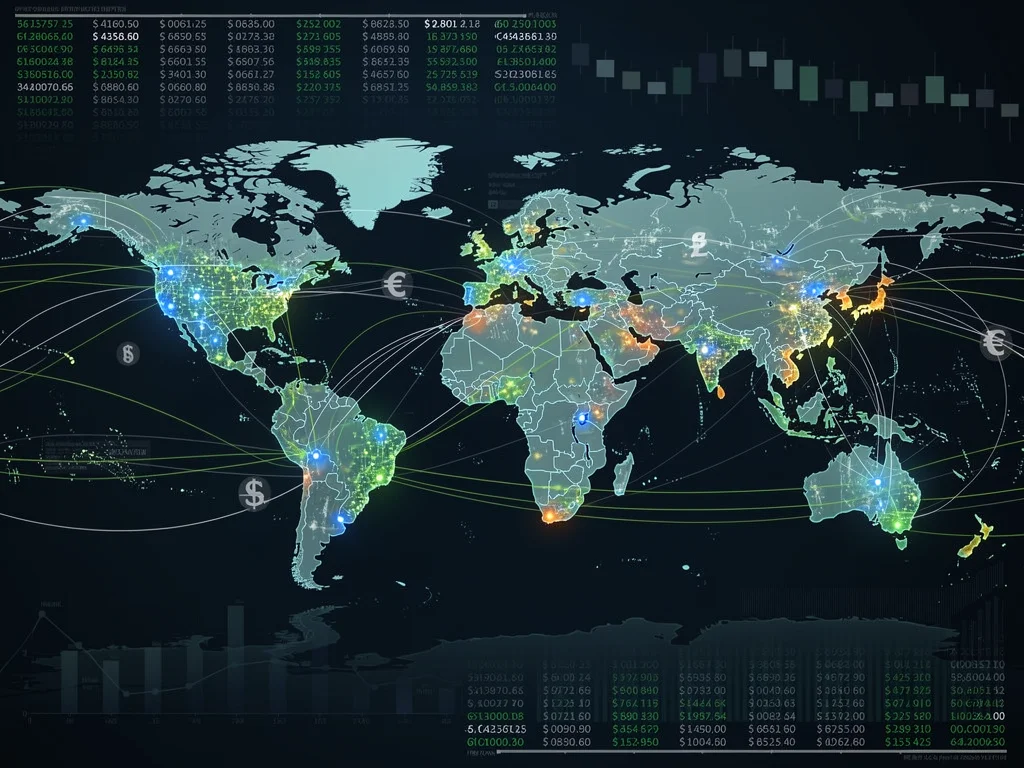
The US debt ceiling debate is not solely a domestic issue; its resolution, or lack thereof, carries significant global repercussions. The United States dollar remains the world’s primary reserve currency, and US Treasury bonds are considered the safest asset globally. Any threat to this status sends shockwaves through international financial systems.
A default, or even a prolonged near-default, could undermine international confidence in the reliability of the US as a financial partner. This could prompt central banks and sovereign wealth funds to reconsider their holdings of US dollars and Treasuries, leading to a potential shift in global financial power dynamics over the long term.
Impact on Emerging Markets and Trade
Emerging markets are particularly susceptible to US economic instability. Many emerging economies hold significant dollar-denominated debt, making them vulnerable to fluctuations in the dollar’s value and global interest rates. A crisis of confidence in the US could lead to capital flight from these markets, currency depreciation, and increased borrowing costs.
Currency Volatility: The dollar’s instability can cause significant exchange rate fluctuations, impacting international trade and investment.
Capital Flight: Investors may pull funds from riskier emerging markets, seeking safety elsewhere, exacerbating economic woes in those regions.
Trade Disruptions: A weakened US economy reduces demand for imports, affecting export-dependent nations. Global supply chains could also face disruptions due to financial uncertainty.
Furthermore, the US plays a crucial role in global trade and finance through institutions like the International Monetary Fund (IMF) and the World Bank. A domestic fiscal crisis could hamper its ability to lead or contribute effectively to global economic stability initiatives, leaving a vacuum that could be filled by other powers or simply lead to greater global instability.
Therefore, the way the US manages its debt ceiling in 2026 will be closely watched by governments and financial institutions worldwide, as it serves as a critical indicator of America’s commitment to fiscal responsibility and its role as a stable anchor in the global economy.
Navigating the Uncertainty: Strategies for Investors and Policymakers
Given the recurring nature of the US debt ceiling debate and its significant implications, both investors and policymakers need to adopt proactive strategies to navigate the inherent uncertainty. For investors, this means building resilient portfolios and understanding potential market reactions. For policymakers, it involves seeking long-term solutions to avoid repeated crises.
Investors should consider diversifying their portfolios across different asset classes, geographies, and currencies to mitigate risks associated with US-centric economic shocks. Reviewing exposure to sectors highly dependent on government spending or those particularly vulnerable to interest rate hikes is also prudent. Gold and other safe-haven assets might gain appeal during periods of extreme uncertainty.
Policymaker Approaches to Debt Ceiling Reform
Policymakers face the more fundamental challenge of reforming the debt ceiling mechanism itself. Several proposals have been floated over the years, each with its own set of advantages and disadvantages. The goal is to prevent the national economy from being held hostage to political brinkmanship.
Abolishing the Debt Ceiling: Some argue for its complete elimination, allowing the Treasury to borrow as needed to meet obligations already approved by Congress. This would align the US with most other developed nations.
Automatic Adjustments: Tying the debt ceiling to congressional budget resolutions, so that when new spending is approved, the debt limit automatically adjusts.
Presidential Authority: Granting the President the authority to raise the debt ceiling, subject to congressional override, reducing the potential for default.
While these reforms are politically challenging to implement, the economic costs of repeated debt ceiling crises provide a strong rationale for pursuing them. The current system introduces unnecessary instability and tarnishes the nation’s financial reputation, making long-term fiscal planning more difficult for both the government and private sector.
Ultimately, a concerted effort from both sides of the political spectrum is required to find a sustainable solution. Without reform, the 2026 debt ceiling debate, and those that follow, will continue to be a source of significant economic anxiety and potential market disruption, underscoring the urgent need for a more stable approach to managing the nation’s finances.
Key Aspect
Brief Description
Debt Ceiling Basics
A legislative cap on the total amount of money the US government can borrow to meet existing obligations.
Market Impact
Increased volatility, erosion of investor confidence, potential for higher interest rates, and stock market declines.
Global Repercussions
Undermines US dollar’s status, impacts emerging markets, and disrupts global trade and financial stability.
Mitigation Strategies
Portfolio diversification for investors; legislative reform for policymakers to prevent future crises.
Frequently Asked Questions About the US Debt Ceiling
What is the US debt ceiling and why is it important?▼
The US debt ceiling is a statutory limit on the total amount the federal government can borrow to meet its existing legal obligations. It’s important because hitting this limit without congressional action can lead to a government default, triggering severe economic instability and global financial repercussions.
How does the debt ceiling debate affect financial markets?▼
Debt ceiling debates typically increase market volatility, reduce investor confidence, and can lead to stock market declines. The uncertainty surrounding a potential default can also drive up interest rates for government and corporate borrowing, impacting economic growth and investment decisions globally.
What happens if the US government defaults on its debt?▼
A US government default, even temporary, would be catastrophic. It would likely trigger a global financial crisis, cause a sharp recession in the US, lead to a dramatic rise in interest rates, and severely damage the dollar’s status as the world’s reserve currency, impacting international trade and finance.
What are the long-term implications of repeated debt ceiling crises?▼
Repeated crises erode international trust in US financial stability, potentially leading to a permanent increase in government borrowing costs. It can also diminish the dollar’s global standing, encourage other nations to seek alternative reserve currencies, and foster sustained economic uncertainty, hindering long-term investment and growth.
Are there proposed solutions to avoid future debt ceiling impasses?▼
Yes, several solutions have been proposed, including abolishing the debt ceiling entirely, linking its adjustment automatically to congressional budget decisions, or granting the President more authority to raise the limit subject to congressional override. These aim to depoliticise the process and prevent economic damage.
Conclusion
The US debt ceiling debate remains a critical and recurring challenge with profound implications for 2026 financial markets and beyond. Its potential to trigger market volatility, increase borrowing costs, and erode investor confidence underscores the urgent need for a more stable and predictable approach to fiscal governance. As the global economy navigates its complexities, the resolution of this uniquely American political phenomenon will continue to be a defining factor in both domestic prosperity and international financial stability. Proactive engagement from both policymakers and informed investors is essential to mitigate risks and foster a more resilient economic future.
A journalism student and passionate about communication, she has been working as a content intern for 1 year and 3 months, producing creative and informative texts about decoration and construction. With an eye for detail and a focus on the reader, she writes with ease and clarity to help the public make more informed decisions in their daily lives.