2026 US Vocational Training: High-Demand Skills for Jobs
In 2026, US vocational training will focus on rapidly evolving sectors like renewable energy, AI integration, advanced manufacturing, and healthcare support, equipping individuals with essential skills for immediate employment in a dynamic job market.
The landscape of work is continually shifting, and staying ahead means understanding where the demand lies. For those seeking direct pathways to fulfilling careers, understanding 2026 Trends in US Vocational Training: High-Demand Skills for Immediate Employment is more crucial than ever. This guide delves into the sectors poised for significant growth and the practical skills that will secure your place in the workforce.
The Evolving Landscape of US Vocational Training
Vocational training in the United States is undergoing a significant transformation, moving beyond traditional trades to embrace the demands of a high-tech, service-oriented economy. As industries evolve, so too must the educational pathways that prepare the workforce. This shift is not just about learning new tools; it’s about developing adaptable skills that can meet future challenges.
The focus for 2026 is increasingly on interdisciplinary knowledge and practical application, ensuring graduates are not only skilled but also innovative problem-solvers. Educational institutions and industry partners are collaborating more closely to tailor curricula that directly address current and future labour market needs. This proactive approach aims to minimise skill gaps and enhance employability across various sectors.
Redefining Vocational Education
Modern vocational education is no longer confined to workshops; it incorporates digital literacy, critical thinking, and soft skills essential for any professional environment. The integration of virtual reality (VR) and augmented reality (AR) in training simulations is becoming more common, offering immersive learning experiences that replicate real-world scenarios without the associated risks. This technological leap allows for more efficient and effective skill acquisition.
- Digital Literacy: Essential for navigating modern workplaces and utilising industry-specific software.
- Problem-Solving: The ability to analyse complex situations and devise effective solutions.
- Adaptability: Crucial for thriving in rapidly changing industries and adopting new technologies.
- Communication: Clear and effective interaction with colleagues, clients, and supervisors.
Moreover, the emphasis on lifelong learning is growing, with vocational programmes designed to offer modular courses and micro-credentials. This allows individuals to continuously update their skill sets in response to technological advancements and economic shifts. The goal is to create a flexible and resilient workforce capable of adapting to any future industry demands.
In conclusion, the evolution of US vocational training reflects a commitment to preparing individuals for immediate and sustained success in a dynamic job market. By focusing on relevant skills and innovative teaching methods, these programmes are proving to be invaluable pathways to stable and rewarding careers.
Renewable Energy and Green Technologies
The global push towards sustainability has positioned the renewable energy sector as a major growth area, creating a significant demand for skilled technicians and specialists. As the United States continues to invest heavily in green initiatives, vocational training programmes are rapidly expanding to meet the needs of this burgeoning industry. This sector offers not only immediate employment but also a chance to contribute to a more sustainable future.
From solar panel installation to wind turbine maintenance, the jobs in this field require a precise blend of technical expertise and safety awareness. Training programmes are designed to provide hands-on experience with the latest technologies, ensuring graduates are job-ready upon completion. The emphasis is on practical skills that can be directly applied in the field, making vocational training an ideal route for entry into this dynamic industry.
Key Roles in Renewable Energy
The diversity of roles within renewable energy means there are opportunities for various skill sets. Technicians are needed for installation, maintenance, and repair across a range of green technologies. These roles often involve working outdoors and require a strong understanding of electrical systems and mechanical components.
- Solar Photovoltaic Installers: Responsible for assembling, installing, and maintaining solar panels on rooftops or other structures.
- Wind Turbine Technicians: Specialise in the installation, inspection, maintenance, and repair of wind turbines.
- Energy Efficiency Specialists: Assess buildings and systems to identify opportunities for energy savings and implement solutions.
- Biofuels Production Operators: Operate and maintain equipment used in the production of biofuels from organic matter.
Beyond these direct roles, there’s also a growing need for professionals in energy storage solutions, smart grid technologies, and sustainable waste management. Vocational courses are adapting to include modules on battery storage systems and advanced grid infrastructure, preparing students for the next wave of green technology advancements. The demand for these skills is projected to increase significantly over the next decade.
Ultimately, the renewable energy sector represents a robust pathway for vocational graduates seeking meaningful employment. The training provided equips individuals with specialised skills that are critical for the transition to a greener economy, offering long-term career stability and growth.
Artificial Intelligence and Automation Integration
The pervasive influence of Artificial Intelligence (AI) and automation is reshaping nearly every industry, creating a new category of vocational roles focused on implementing, maintaining, and interacting with these advanced systems. Far from replacing human jobs entirely, AI is creating new demands for skilled individuals who can bridge the gap between technology and practical application. This integration requires a workforce capable of understanding and managing complex automated processes.
Vocational training in this area is not about becoming an AI developer, but rather about understanding how AI tools can be deployed and managed in specific operational contexts. This includes roles in manufacturing, logistics, customer service, and even agriculture, where AI-driven robots and systems are becoming increasingly common. The focus is on practical implementation rather than theoretical development.
Practical AI and Automation Skills
To thrive in this evolving landscape, individuals need specific vocational skills related to AI and automation. These are often hands-on roles that involve configuring systems, troubleshooting issues, and ensuring smooth operation. The ability to work alongside intelligent machines is paramount.
- Robotics Technicians: Installing, programming, and maintaining robotic systems in manufacturing and other industries.
- Automation Specialists: Designing, implementing, and optimising automated processes in various operational environments.
- AI System Support: Providing technical assistance and troubleshooting for AI-powered software and hardware.
- Data Labelling and Annotation: Preparing data for AI model training, ensuring accuracy and quality.
These roles often require a blend of technical aptitude, problem-solving skills, and an understanding of specific industry applications. For instance, an automation specialist in a warehouse might need to understand logistics workflows, while an AI system support technician in healthcare would require knowledge of medical data protocols. Vocational programmes are therefore becoming more specialised to cater to these nuanced requirements.

The continuous evolution of AI means that vocational training in this field must also be dynamic, incorporating the latest advancements and practical applications. Graduates with these skills will be highly sought after, as businesses increasingly rely on intelligent automation to enhance efficiency and productivity.
Advanced Manufacturing and Mechatronics
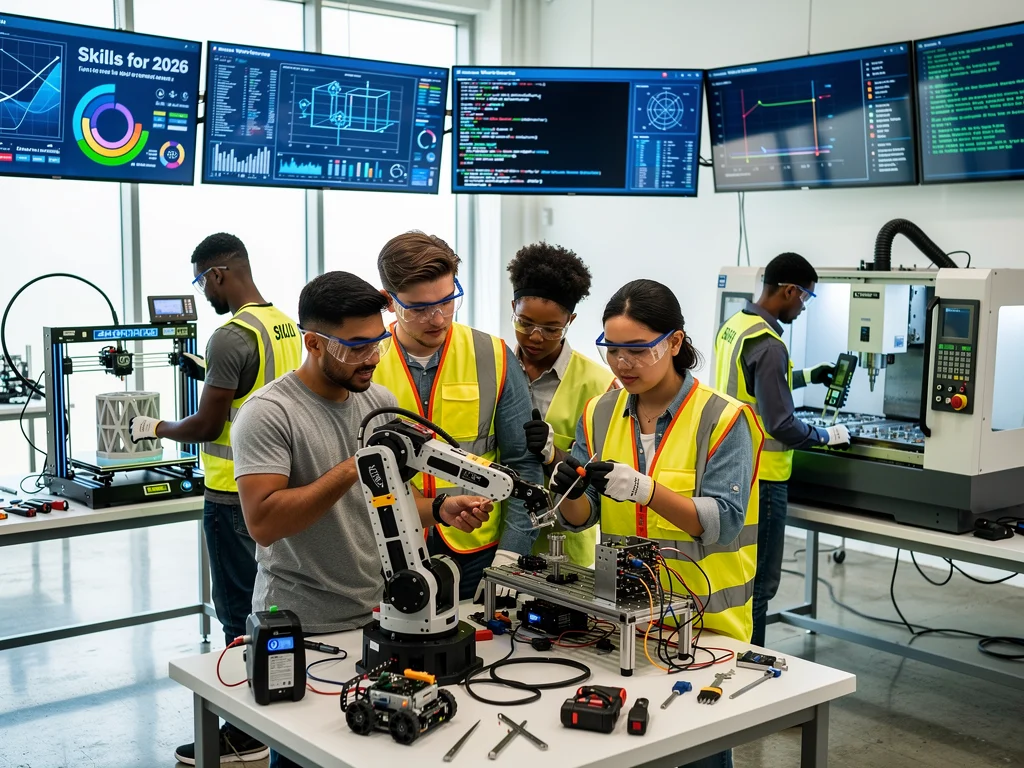
The manufacturing sector in the US is experiencing a renaissance, driven by advanced technologies such as robotics, 3D printing, and smart factory systems. This evolution demands a new breed of skilled professionals capable of working with complex integrated systems. Vocational training in advanced manufacturing and mechatronics is therefore critical, preparing individuals for roles that combine mechanical, electrical, and computer engineering principles.
Mechatronics, in particular, is a rapidly growing field that focuses on the design and maintenance of automated machinery. These systems are integral to modern production lines, requiring technicians who can diagnose issues across multiple engineering disciplines. The training emphasises hands-on experience with programmable logic controllers (PLCs), sensor technology, and robotic automation.
Skills for the Modern Factory
To succeed in advanced manufacturing, workers need a robust set of interdisciplinary skills. The ability to read schematics, understand complex control systems, and perform precision maintenance are all vital. Safety protocols are also paramount, given the sophisticated machinery involved.
Modern manufacturing environments are highly automated and interconnected, often referred to as Industry 4.0. This means that technicians need to be proficient not only in operating machinery but also in understanding data analytics and cybersecurity basics as they pertain to industrial control systems. The integration of IT and operational technology (OT) is a key aspect of this field.
- Robotics and Automation: Programming, operating, and troubleshooting industrial robots.
- Additive Manufacturing (3D Printing): Operating and maintaining 3D printers for prototyping and production.
- Industrial Control Systems: Working with PLCs and other control systems to manage production processes.
- Quality Control and Metrology: Using precision instruments to ensure product quality and adherence to specifications.
Vocational programmes are often developed in partnership with manufacturing companies, ensuring that the curriculum directly addresses industry needs. This collaboration provides students with access to state-of-the-art equipment and real-world projects, making them highly attractive to employers upon graduation.
In essence, advanced manufacturing and mechatronics offer a challenging yet rewarding career path for those who enjoy working with technology and complex systems. The demand for these specialised skills is set to remain high as industries continue to automate and innovate.
Healthcare Support and Allied Health Professions
The healthcare industry remains a cornerstone of the US economy, with an ever-increasing demand for skilled support staff and allied health professionals. As the population ages and medical technologies advance, roles that directly assist doctors and nurses, or perform specialised diagnostic and therapeutic tasks, are experiencing significant growth. Vocational training is a direct pathway into these crucial positions, offering stability and the satisfaction of helping others.
These roles are essential for the smooth operation of hospitals, clinics, and long-term care facilities. They often require a combination of technical skills, empathy, and strong communication abilities. The training programmes are designed to provide both theoretical knowledge and extensive practical experience through clinical placements, ensuring graduates are fully prepared for the demands of patient care.
In-Demand Healthcare Support Roles
The allied health sector encompasses a wide array of professions, each playing a vital role in patient care. These roles are often the first point of contact for patients or provide critical diagnostic information that guides treatment plans. The need for these professionals is consistently high across the nation.
- Medical Assistants: Performing administrative and clinical tasks in doctor’s offices, clinics, and other healthcare facilities.
- Phlebotomy Technicians: Drawing blood for tests, transfusions, donations, or research.
- Dental Assistants: Supporting dentists during procedures, taking X-rays, and managing patient records.
- Medical Sonographers: Operating ultrasound equipment to create images of the body’s internal structures for diagnostic purposes.
- Physical Therapist Assistants: Assisting physical therapists in providing care to patients recovering from injuries or illnesses.
Beyond these, there is also a growing need for medical coding and billing specialists, health information technicians, and surgical technologists. These roles require precision, attention to detail, and a thorough understanding of medical terminology and procedures. Vocational programmes often include certifications necessary for professional practice in these fields.

The healthcare support sector offers diverse opportunities for individuals seeking a career that is both challenging and deeply rewarding. With continuous demand and opportunities for specialisation, vocational training in allied health provides a secure and impactful professional future.
Cybersecurity and IT Support
In an increasingly digital world, the need for robust cybersecurity measures and reliable IT support is paramount across all industries. Businesses and individuals alike face constant threats from cyber attacks, making skilled cybersecurity professionals and IT technicians indispensable. Vocational training in these fields offers a direct route into a high-demand sector with excellent career growth prospects.
Cybersecurity specialists protect networks and data from unauthorised access, while IT support professionals ensure the smooth operation of computer systems and resolve technical issues. These roles require a strong understanding of computer networks, operating systems, and security protocols, as well as excellent problem-solving abilities. The training often involves hands-on labs and simulations to prepare students for real-world scenarios.
Essential Digital Defence Skills
The landscape of cyber threats is constantly evolving, requiring professionals to stay updated with the latest security practices and technologies. Vocational programmes focus on practical skills that are immediately applicable in defending digital assets and maintaining operational continuity.
Beyond technical skills, cybersecurity and IT support roles also demand critical thinking and an ethical approach to data handling. Understanding the legal and ethical implications of data breaches and privacy regulations is as important as technical proficiency. Many vocational courses incorporate modules on compliance and ethical hacking to provide a well-rounded education.
- Network Security: Implementing and managing firewalls, intrusion detection systems, and VPNs.
- Endpoint Protection: Securing individual devices like computers, laptops, and mobile phones from threats.
- Incident Response: Identifying, containing, and recovering from cyber security incidents.
- Help Desk Support: Providing technical assistance to users, troubleshooting hardware and software problems.
- Cloud Security: Protecting data and applications hosted in cloud environments.
Many vocational programmes in cybersecurity and IT support lead to industry-recognised certifications, such as CompTIA Security+, CCNA, or Certified Ethical Hacker (CEH). These certifications significantly enhance employability and demonstrate a high level of competence to potential employers.
In summary, a career in cybersecurity or IT support offers a dynamic and challenging environment for individuals passionate about technology and problem-solving. The continuous demand for these skills ensures a stable and evolving career path in the digital age.
| Key Trend | Brief Description |
|---|---|
| Renewable Energy | Growing demand for solar, wind, and energy efficiency technicians due to sustainability push. |
| AI & Automation | New vocational roles in managing and maintaining AI-driven systems across industries. |
| Healthcare Support | Consistent high demand for medical assistants, phlebotomists, and other allied health roles. |
| Cybersecurity & IT | Critical need for professionals to protect digital assets and provide essential tech support. |
Frequently Asked Questions About 2026 Vocational Training
The fastest-growing vocational fields for 2026 in the US include renewable energy, AI and automation integration, advanced manufacturing, healthcare support, and cybersecurity. These sectors are experiencing significant expansion driven by technological advancements and societal needs, offering numerous immediate employment opportunities for skilled graduates.
Vocational training programmes can vary in length, typically ranging from a few months for certificate programmes to two years for associate degrees. The duration depends on the specific skill set and the depth of knowledge required. Many programmes are designed for rapid entry into the workforce.
Absolutely. Vocational qualifications are highly valued by employers, especially for roles requiring specific technical skills. Many programmes are developed with industry input, ensuring graduates possess the precise competencies needed. Certifications from accredited vocational schools are often preferred over traditional degrees for certain hands-on roles.
Beyond technical expertise, essential soft skills for vocational careers in 2026 include problem-solving, critical thinking, adaptability, communication, and teamwork. Employers seek individuals who can not only perform tasks but also collaborate effectively, learn new techniques, and troubleshoot challenges independently.
Yes, vocational training can certainly lead to significant long-term career growth. Many entry-level vocational positions offer pathways for advancement through continued education, specialisation, and on-the-job experience. Opportunities for supervisory roles, advanced technical positions, or even starting one’s own business are common in various trades.
Conclusion
The landscape of employment in the United States is dynamic, with technological advancements and evolving societal needs continually shaping the demand for specific skills. As we look towards 2026, vocational training stands out as a critical pathway for individuals seeking immediate and sustainable employment in high-growth sectors. From the burgeoning fields of renewable energy and AI integration to the steadfast demands of healthcare support and cybersecurity, the opportunities are abundant for those willing to acquire specialised, practical skills. Embracing these trends through targeted vocational education not only secures a promising career but also contributes significantly to the nation’s economic resilience and innovation.
Related Posts: