US State Scholarship Programmes 2026: Best Financial Aid

For 2026 university entrants, understanding US state scholarship programmes is key to securing financial aid; many states offer substantial grants and scholarships based on merit, need, or specific fields of study, significantly reducing the cost of higher education.
Navigating the complex landscape of university funding can be daunting, but for prospective students eyeing higher education in 2026, understanding the nuances of US state scholarship programmes 2026 is paramount. Many states offer robust financial aid opportunities that can significantly alleviate the burden of tuition fees and living expenses. This guide aims to shed light on which states stand out for their generous provisions, helping you make informed decisions about your academic future.
Understanding the Landscape of State-Funded Financial Aid
State-funded financial aid programmes are crucial components of the broader higher education funding ecosystem in the United States. These initiatives are designed to make university education more accessible and affordable for residents, often addressing specific state needs, encouraging certain academic pursuits, or supporting students from particular socio-economic backgrounds. The variety of programmes available can be overwhelming, but a systematic approach to understanding them is key.
These scholarships and grants differ significantly from federal aid or institutional scholarships. While federal aid like Pell Grants is nationally standardised, and institutional aid varies by university, state programmes are uniquely tailored to each state’s legislative priorities and budgetary allocations. This means that what might be a generous offering in one state could be non-existent or minimal in another, creating a diverse patchwork of opportunities across the nation.
Types of State Scholarship Programmes
State scholarships generally fall into several categories, each with distinct eligibility criteria and objectives. Understanding these classifications can help prospective students narrow down their search and identify programmes that best suit their profile.
- Merit-Based Scholarships: Awarded to students who demonstrate exceptional academic achievement, leadership skills, or talents in specific areas like arts or athletics.
- Need-Based Grants: Provided to students who demonstrate financial need, often determined by the Free Application for Federal Student Aid (FAFSA) and state-specific income thresholds.
- Targeted Programmes: Designed to encourage students to pursue careers in high-demand fields within the state, such as teaching, nursing, or STEM disciplines, often with a service commitment post-graduation.
- Residency-Based Aid: Many programmes require applicants to be long-term residents of the state, sometimes with additional requirements regarding high school attendance within the state.
In conclusion, state-funded financial aid is a vital resource for many students. By familiarising themselves with the different types of programmes and their underlying goals, applicants can strategically position themselves to maximise their chances of securing valuable funding for their 2026 university enrolment.
Top States for Generous Scholarship Programmes in 2026
When considering which states offer the most robust financial aid packages for 2026 university entrants, several consistently rise to the top. These states have demonstrated a long-standing commitment to making higher education affordable for their residents through comprehensive scholarship and grant programmes. Their initiatives often combine merit, need, and specific career-focused incentives, creating a broad safety net for diverse student populations.
Identifying these leading states involves looking at factors such as the total amount of aid disbursed, the percentage of students receiving state aid, and the breadth of programmes available. While specific figures can fluctuate annually based on legislative changes and economic conditions, certain states maintain a strong reputation for their dedication to student financial support. This commitment reflects a broader understanding of the economic and social benefits of an educated populace.
States Leading the Way in Financial Aid
Several states have established themselves as leaders in providing substantial financial assistance. Their programmes often serve as models for other states looking to enhance their own offerings.
- California: Home to the Cal Grant program, which offers significant aid based on both academic merit and financial need for students attending California public and private universities.
- New York: The Excelsior Scholarship provides tuition-free university for eligible New York residents attending SUNY or CUNY schools, making it a highly attractive option.
- Florida: The Bright Futures Scholarship Program rewards academic achievement with various levels of financial support for in-state university attendance.
- Texas: Offers a range of programmes, including the Texas Grant, which assists financially needy students in pursuing higher education within the state.
These states represent some of the most promising avenues for students seeking significant financial relief for their university studies. Their commitment to funding higher education makes them prime targets for prospective 2026 university entrants looking for comprehensive support. Researching the specific criteria for each state’s programmes is the next crucial step.
Deep Dive into Notable State Scholarship Programmes
To truly understand the value offered by various states, it’s essential to look beyond general statements and delve into the specifics of their most impactful scholarship programmes. These flagship initiatives often define a state’s commitment to higher education accessibility and provide the most substantial financial relief to students. Each programme has unique eligibility requirements, application processes, and award amounts, making detailed exploration crucial for prospective applicants.
The success of these programmes often lies in their ability to address diverse student needs, from high-achieving scholars to those facing significant financial barriers. By examining the mechanics of these prominent programmes, students can gain a clearer picture of what kind of support they might be eligible for and what steps they need to take to secure it. This detailed understanding can dramatically improve an applicant’s chances of success.
California’s Cal Grant Program: A Comprehensive Approach
The Cal Grant programme is a cornerstone of financial aid for California residents. It comprises several awards tailored to different student profiles.
- Cal Grant A: Primarily for low- and middle-income students attending four-year universities, covering tuition and fees.
- Cal Grant B: Offers a living allowance and, after the first year, tuition assistance for students with greater financial need.
- Cal Grant C: Supports students pursuing vocational or career technical programmes.
Eligibility for Cal Grants often depends on GPA, family income, and asset ceilings, with applications typically requiring the FAFSA and a Cal Grant GPA Verification Form.
New York’s Excelsior Scholarship: Tuition-Free University
The Excelsior Scholarship aims to provide tuition-free university education at SUNY and CUNY schools for eligible New York residents. This programme is particularly impactful due to its broad reach and the significant financial relief it offers.
Key requirements include maintaining a certain GPA, completing a minimum number of credits each year, and agreeing to reside and work in New York State for a period equal to the number of years the award was received. This commitment ensures that the state benefits from the educated workforce it helps to create, making it a mutually beneficial arrangement.
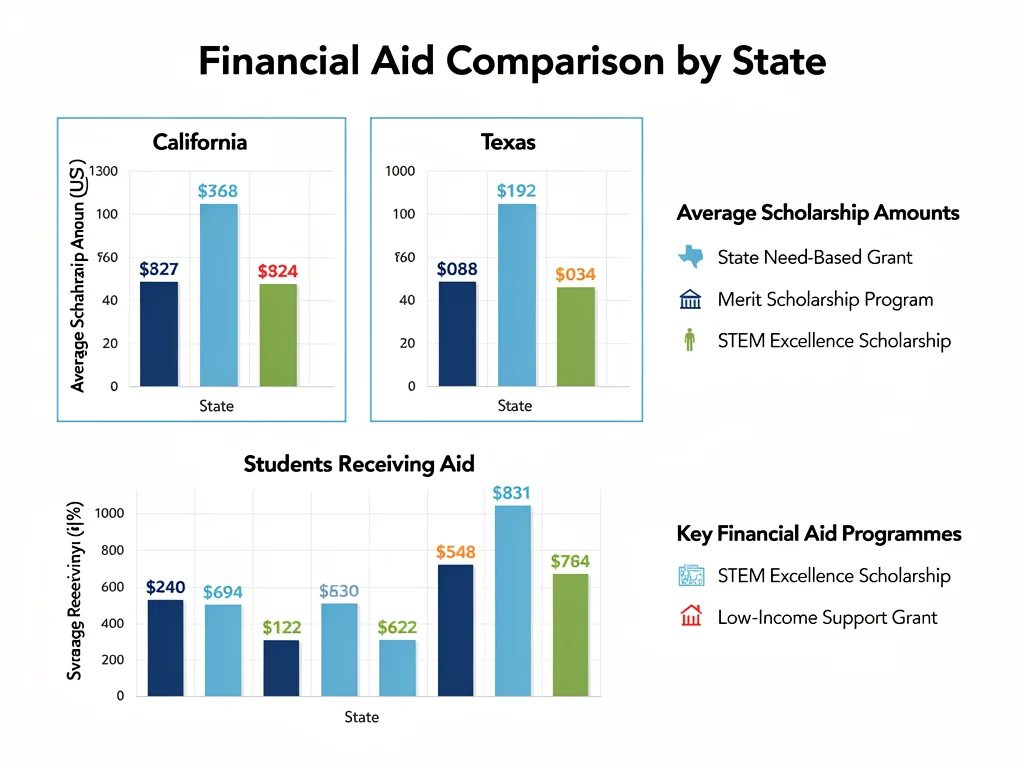
In summary, programmes like California’s Cal Grant and New York’s Excelsior Scholarship exemplify how states are actively working to mitigate the rising costs of higher education. Understanding their specific criteria and obligations is vital for any student hoping to benefit from these substantial financial aids.
Eligibility Requirements and Application Strategies
Securing state scholarships in 2026 is not just about identifying generous programmes; it’s equally about understanding and meticulously meeting their eligibility requirements and crafting a compelling application. Each state and programme will have specific criteria, which can range from academic performance and financial need to residency status and chosen field of study. Overlooking any detail can lead to disqualification, making thorough preparation indispensable.
A strategic approach to applications involves more than just filling out forms. It requires early planning, careful documentation, and often, compelling personal statements or essays that highlight a student’s unique qualities and aspirations. The competition for these funds can be intense, so presenting oneself as a deserving candidate is crucial. This section will outline common eligibility factors and effective strategies to enhance your application.
Common Eligibility Criteria
While specific requirements vary, several common themes emerge across most state scholarship programmes.
- Residency: Applicants must typically be a legal resident of the state for a specified period (e.g., 12 months prior to application).
- Academic Standing: Many scholarships require a minimum GPA, SAT/ACT scores, or specific high school coursework.
- Financial Need: For need-based grants, eligibility is determined by the FAFSA and state-specific financial aid forms, assessing family income and assets.
- Enrollment Status: Students must usually be enrolled or planning to enrol at an eligible in-state university, often full-time.
- Citizenship/Immigration Status: Most programmes require US citizenship or eligible non-citizen status.
Crafting a Winning Application
Beyond meeting the basic criteria, a strong application can significantly boost your chances.
Begin by researching each scholarship’s specific requirements thoroughly. Pay close attention to deadlines, as late submissions are almost universally rejected. Gather all necessary documents well in advance, including transcripts, test scores, and financial statements. When writing essays or personal statements, be authentic and articulate your goals, experiences, and why you are a deserving candidate. Proofread everything meticulously for any errors.
In conclusion, a successful application for state scholarships hinges on a clear understanding of eligibility and a well-organised, persuasive submission. Proactive planning and attention to detail are your best allies in this competitive process.
Maximising Your Chances: Tips for 2026 University Entrants
For students aiming to enter university in 2026, the journey to securing financial aid through state scholarship programmes can be complex, but with the right strategies, you can significantly enhance your prospects. It’s not merely about applying; it’s about applying smartly, comprehensively, and strategically. Maximising your chances involves understanding the nuances of the application process, leveraging available resources, and presenting yourself in the best possible light to scholarship committees.
The competitive nature of these programmes means that every advantage counts. From early preparation to meticulous attention to detail, each step in your application journey plays a critical role. This section provides actionable tips designed to help you navigate the landscape of state scholarships effectively, ensuring you stand out among other applicants and secure the funding you need for your higher education goals.
Key Strategies for Scholarship Success
To improve your odds of receiving state financial aid, consider the following practical steps.
- Start Early: Begin researching state scholarship programmes well before your senior year of high school. Deadlines can be as early as the autumn of your senior year, and some require preparatory steps.
- Understand FAFSA: The Free Application for Federal Student Aid (FAFSA) is often the gateway to state aid. Complete it accurately and as soon as it becomes available (typically October 1st).
- Tailor Applications: Do not use a generic application for all scholarships. Customise your essays and supporting documents to align with the specific values and criteria of each programme.
- Seek Recommendations: Cultivate strong relationships with teachers, counsellors, and mentors who can write compelling letters of recommendation highlighting your strengths and character.
- Proofread Everything: A polished application free of grammatical errors and typos reflects professionalism and attention to detail. Get multiple people to review your application before submission.

Additionally, don’t overlook local scholarships offered by community organisations, foundations, and businesses, as these can often be less competitive and complement state aid. Attend financial aid workshops offered by your high school or local universities to gain further insights. By adopting these strategies, 2026 university entrants can significantly boost their chances of securing valuable state scholarship funding.
The Future of State Scholarship Programmes and 2026 Projections
As we look towards 2026, the landscape of US state scholarship programmes is continually evolving, shaped by economic shifts, legislative priorities, and educational policy changes. Understanding these potential future trends can help prospective university entrants and their families anticipate what financial aid might look like and how to best prepare. While precise predictions are challenging, general directions can often be inferred from current discussions and historical patterns.
Factors such as state budgetary health, shifts in workforce demands, and evolving societal values all play a role in determining the scope and focus of future scholarship initiatives. Students preparing for university enrolment in 2026 should remain adaptable and informed, as the specifics of financial aid programmes can change even within a short timeframe. Staying updated on legislative news and educational policy debates within target states will be crucial.
Anticipated Trends in State Financial Aid
Several trends are likely to influence state scholarship offerings in the coming years.
- Increased Focus on Workforce Development: States may continue to prioritise scholarships for students entering high-demand fields like healthcare, technology, and skilled trades, aligning educational outcomes with economic needs.
- Performance-Based Funding: Some states might explore linking scholarship renewals or amounts to student academic progress or timely degree completion, encouraging efficiency in higher education.
- Streamlined Application Processes: Efforts to simplify financial aid applications, possibly through integrated state and federal forms, could make programmes more accessible.
- Equity and Access Initiatives: There may be a continued emphasis on programmes designed to support underserved populations, first-generation students, and those from low-income backgrounds, aiming to reduce educational disparities.
Furthermore, the debate around tuition affordability at state universities will likely remain a significant driver for legislative action. States may explore innovative funding models or expand existing tuition-free initiatives, particularly for in-state residents. However, these expansions often come with residency or post-graduation work requirements.
In conclusion, while the exact details of 2026 state scholarship programmes cannot be known with certainty, a general trend towards strategic investment in key sectors, enhanced accessibility, and accountability is likely. Prospective students should monitor developments closely and be prepared to adapt their application strategies accordingly to benefit from these evolving opportunities.
| Key Aspect | Brief Description |
|---|---|
| Top States for Aid | California, New York, Florida, and Texas often lead in generous state scholarship programmes. |
| Eligibility Factors | Residency, academic merit, financial need, and chosen field of study are common criteria. |
| Application Strategy | Start early, complete FAFSA accurately, tailor applications, and secure strong recommendations. |
| Future Trends | Likely focus on workforce development, equity, and streamlined processes for 2026. |
Frequently Asked Questions About State Scholarships
Federal aid, like Pell Grants, is standardised across the US. State aid, however, is specific to each state, with unique eligibility, application processes, and funding amounts determined by state legislation and budgets. This often means state aid targets residents for in-state institutions.
Yes, in most cases, completing the Free Application for Federal Student Aid (FAFSA) is a prerequisite for state scholarships, especially those that are need-based. The FAFSA provides a standardised assessment of your financial need, which states then use to determine eligibility for their own programmes.
Generally, state scholarships are designed to support residents attending in-state universities. While there might be rare exceptions or specific reciprocal agreements between states, the vast majority of state-funded programmes require you to enrol at an eligible institution within the awarding state.
If your state has limited scholarship offerings, focus on maximising federal aid, institutional scholarships from the universities you apply to, and private scholarships from national or local organisations. Also, consider states with more generous programmes if you are open to relocating for your studies.
Prospective 2026 university entrants should ideally start researching state scholarship programmes during their junior year of high school. Many application windows open in the autumn of the senior year, with some deadlines as early as October or November. Early preparation is key to success.
Conclusion
Navigating the myriad of US state scholarship programmes for 2026 university entrants requires diligence, strategic planning, and a clear understanding of each state’s unique offerings. As demonstrated, states like California, New York, Florida, and Texas stand out for their comprehensive financial aid packages, designed to make higher education more accessible. By thoroughly researching eligibility requirements, meticulously preparing applications, and staying informed about future trends, prospective students can significantly enhance their chances of securing the financial support needed to achieve their academic aspirations. The investment of time and effort in this process is invaluable, paving the way for a more affordable and enriching university experience.
Related Posts: