Student Loan Forgiveness 2026: Your Eligibility for Debt Relief
Understanding eligibility for student loan forgiveness in 2026 is crucial for many borrowers, as recent announcements have reshaped the landscape of federal debt relief programmes.
Are you wondering if you qualify for the latest federal debt relief benefits? The landscape of student loan forgiveness is constantly evolving, and staying informed about the most recent changes is paramount. This article delves into the specifics of student loan forgiveness 2026, helping you understand the criteria and processes to determine your eligibility for these vital programmes.
Understanding the Current Student Loan Forgiveness Landscape
The concept of student loan forgiveness has been a significant topic of discussion and policy adjustment in the United States for several years. As we approach 2026, it’s essential to grasp the various programmes and initiatives that are currently active or have been recently introduced. These programmes aim to alleviate the financial burden on millions of borrowers, but navigating their complexities can be challenging.
Federal student loan forgiveness programmes typically fall into several categories, each with its own set of requirements and benefits. It’s not a one-size-fits-all solution, meaning your specific loan type, employment history, and income level will play a crucial role in determining what relief you might be eligible for. The government’s intent is often to support specific professions, low-income borrowers, or those who have faced particular hardships.
Key Federal Forgiveness Programmes
Several long-standing federal programmes continue to offer pathways to loan forgiveness. These include Public Service Loan Forgiveness (PSLF), Income-Driven Repayment (IDR) plan forgiveness, and specific programmes for teachers and healthcare professionals. Each of these has distinct eligibility requirements and application processes that borrowers must adhere to.
- Public Service Loan Forgiveness (PSLF): Designed for individuals working full-time for qualifying non-profit organisations or government agencies. Requires 120 qualifying monthly payments.
- Income-Driven Repayment (IDR) Forgiveness: After 20 or 25 years of payments on an IDR plan, any remaining balance may be forgiven. This often depends on the specific IDR plan you are enrolled in.
- Teacher Loan Forgiveness: Available to teachers who work for five consecutive years in low-income schools or educational service agencies. The amount of forgiveness varies.
- Perkins Loan Cancellation: For borrowers with Federal Perkins Loans, this programme offers cancellation based on employment in certain public service jobs.
Understanding the nuances of each programme is the first step towards determining your potential for student loan forgiveness in 2026. The government frequently updates these programmes, so staying informed about the latest policy changes is vital for all borrowers.
Recent Announcements and Policy Shifts Affecting 2026 Eligibility
The student loan landscape is dynamic, with new policies and adjustments frequently announced. These changes can significantly impact eligibility for student loan forgiveness 2026. Recent executive actions and legislative proposals have aimed to broaden access to relief and simplify existing processes, often in response to economic conditions or public demand.
One of the most notable developments has been the ongoing efforts to address issues within existing programmes, such as rectifying past administrative errors that prevented eligible borrowers from receiving forgiveness. These adjustments often involve one-time reviews or recalculations of payment counts for IDR and PSLF, potentially bringing millions of borrowers closer to their forgiveness goals.
Navigating New Forgiveness Initiatives
Beyond the established programmes, there have been discussions and implementations of new initiatives. These new benefits often target specific groups of borrowers or aim to streamline the forgiveness process. For instance, some recent changes have focused on providing relief to borrowers who were misled by their institutions or those with disabilities.
- IDR Account Adjustments: The Department of Education has been working to correct historical inaccuracies in IDR payment counts, leading to automatic forgiveness for some borrowers.
- Targeted Forgiveness: Specific relief measures have been implemented for borrowers with total and permanent disabilities, or those whose schools closed or engaged in misconduct.
- Simplified Application Processes: Efforts are underway to make the application for various forgiveness programmes more straightforward and accessible.
These policy shifts underscore the government’s commitment to addressing the student debt crisis. Borrowers should actively monitor official announcements from the Department of Education and reputable financial aid resources to ensure they are aware of any new opportunities for relief that may arise before or during 2026.
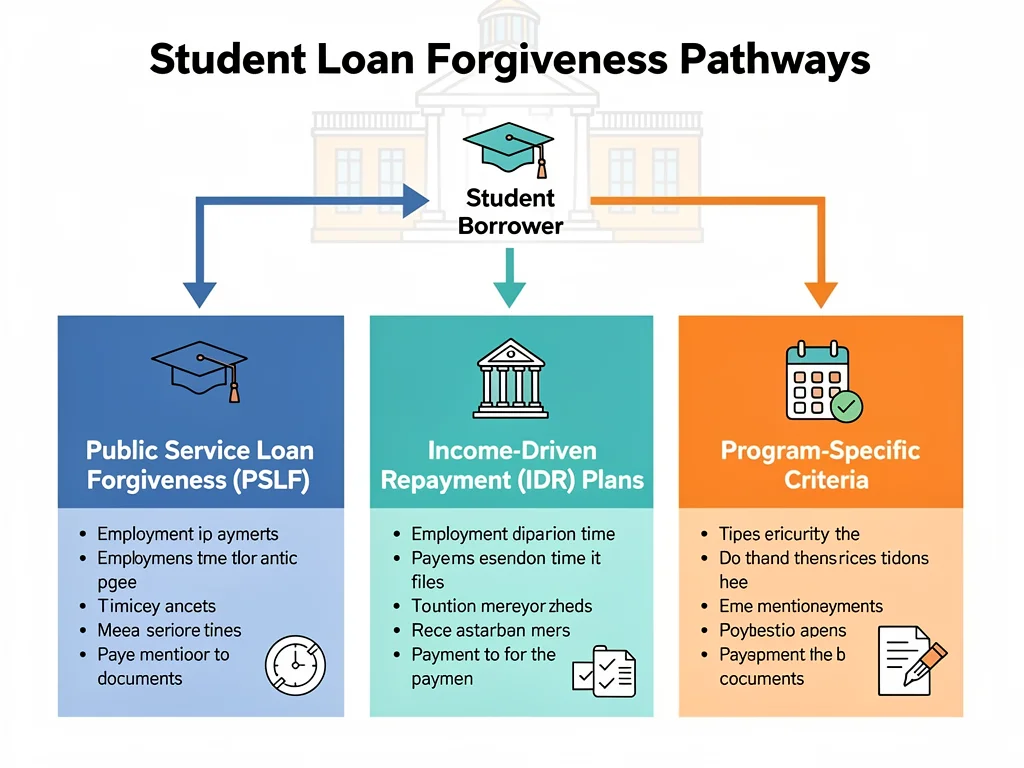
Who Qualifies for Student Loan Forgiveness in 2026? Detailed Criteria
Determining who qualifies for student loan forgiveness 2026 requires a thorough understanding of the specific criteria associated with each programme. Eligibility is rarely universal; instead, it is often tied to factors such as your loan type, employment sector, income, and repayment history. It’s crucial not to assume you are ineligible without first reviewing the detailed requirements.
For federal student loans, which are the primary focus of most forgiveness initiatives, the type of loan you hold (e.g., Direct Loans, FFELP loans, Perkins Loans) can significantly impact your options. Some programmes are exclusive to Direct Loans, while others may require consolidation of older loan types to qualify.
Key Eligibility Factors to Consider
Beyond loan type, several other factors come into play. Your employment history is paramount for programmes like PSLF, where consistent full-time work in a qualifying public service role is a non-negotiable requirement. For IDR forgiveness, your income and family size directly influence your monthly payment and the timeline to forgiveness.
- Loan Type: Primarily federal Direct Loans are eligible. FFELP and Perkins loans may require consolidation into a Direct Consolidation Loan.
- Employment: Specific programmes require employment in public service (government, non-profit) or certain professions (teachers, nurses).
- Income and Family Size: Relevant for Income-Driven Repayment plans, which base monthly payments on a percentage of discretionary income.
- Payment History: Consistent, on-time payments are often required, typically over a period of 10 to 25 years, depending on the programme.
It’s important to keep meticulous records of your payments and employment, as these will be essential when applying for forgiveness. The criteria for student loan forgiveness in 2026 will continue to be refined, so staying updated on official guidance from the Department of Education is paramount.
The Application Process for Debt Relief Benefits
Once you’ve determined your potential eligibility for student loan forgiveness 2026, the next critical step is understanding and navigating the application process. While some forgiveness initiatives, particularly those correcting past administrative errors, may offer automatic relief, most still require borrowers to submit an application.
The application process can vary significantly depending on the specific forgiveness programme. It generally involves gathering necessary documentation, completing official forms, and submitting them to the correct federal loan servicer or the Department of Education. Attention to detail and adherence to deadlines are crucial to a successful application.
Steps to a Successful Application
For programmes like PSLF, you’ll need to submit an Employment Certification Form (ECF) annually or whenever you change employers to track your qualifying payments. For IDR forgiveness, you’ll need to recertify your income and family size each year. Missing these deadlines can delay or even jeopardise your path to forgiveness.
- Identify the Correct Programme: Ensure you are applying for the forgiveness programme that aligns with your eligibility.
- Gather Documentation: Collect employment verification, tax returns, pay stubs, and loan statements.
- Complete Official Forms: Fill out the specific application forms accurately and completely.
- Submit to the Right Authority: Send your application to your loan servicer or the Department of Education as instructed.
- Track Your Application: Keep copies of all submitted documents and correspondence, and follow up regularly.
The application process can sometimes be lengthy, requiring patience and persistence. Utilising online tools and resources provided by the Department of Education can help simplify the process and ensure all requirements are met for student loan forgiveness in 2026.
Maximising Your Chances: Tips for Securing Forgiveness
Securing student loan forgiveness 2026 is not always straightforward, but there are proactive steps you can take to maximise your chances of success. It involves careful planning, diligent record-keeping, and staying informed about any changes to policies or procedures. Don’t wait until the last minute to start preparing; early action can make a significant difference.
One of the most important tips is to understand your loan types and consolidate them if necessary. Many older federal loans, such as FFELP loans, are not directly eligible for certain forgiveness programmes unless they are consolidated into a Direct Consolidation Loan. This step can open up new pathways to relief.
Proactive Strategies for Borrowers
Regularly checking your loan status and payment history with your loan servicer is also vital. Errors can occur, and identifying them early can prevent delays in your forgiveness timeline. Keep meticulous records of all communications, payments, and employment certifications.
- Understand Your Loan Types: Confirm if your loans are federal Direct Loans or if consolidation is required.
- Enroll in the Right IDR Plan: Choose an Income-Driven Repayment plan that best suits your financial situation and forgiveness goals.
- Verify Qualifying Employment: If pursuing PSLF, ensure your employer and job role qualify, and submit Employment Certification Forms regularly.
- Maintain Impeccable Records: Keep copies of all loan documents, payment confirmations, and correspondence with your servicer.
- Stay Informed: Regularly check official Department of Education websites for updates and policy changes.
By taking these proactive measures, you can better navigate the complexities of student loan forgiveness in 2026 and significantly improve your likelihood of receiving the debt relief you deserve. Consistency and attention to detail are your best allies in this process.

Potential Challenges and How to Overcome Them
While the prospect of student loan forgiveness 2026 is encouraging, borrowers may encounter several challenges during the process. These can range from administrative hurdles and communication issues with loan servicers to misunderstandings about eligibility criteria. Being prepared for these potential obstacles can help you navigate them more effectively.
One common challenge is the complexity of documentation requirements. Many forgiveness programmes demand extensive proof of employment, income, and payment history over many years. Missing or incomplete documents can lead to delays or even denials of forgiveness applications.
Addressing Common Obstacles
Another significant hurdle can be the frequent changes in policy and programme rules. What was true last year might not be true this year, making it difficult for borrowers to stay updated. This underscores the importance of relying on official sources for information and regularly checking for updates.
- Administrative Delays: Application processing can take time. Be patient but persistent in following up.
- Documentation Issues: Keep organised records. If documents are lost, contact your employer or servicer for assistance in retrieving them.
- Servicer Errors: Carefully review all communications and statements from your loan servicer. Dispute any inaccuracies promptly.
- Policy Changes: Stay informed by subscribing to official Department of Education newsletters and checking their website regularly.
- Understanding Complex Rules: If confused, seek guidance from non-profit student loan counsellors or trusted financial aid advisors.
Overcoming these challenges requires diligence, advocacy, and a willingness to seek help when needed. Many resources are available to assist borrowers through the forgiveness process, ensuring that legitimate claims for student loan forgiveness in 2026 are not derailed by avoidable issues.
Future Outlook for Student Loan Forgiveness Beyond 2026
The conversation around student loan forgiveness 2026 and beyond continues to evolve, with ongoing debates about the long-term future of federal student aid and debt relief. While current programmes provide significant assistance, there is a constant push for broader, more permanent solutions to the student debt crisis. Understanding these potential future developments can help borrowers anticipate what might come next.
Legislative proposals and executive actions are continuously being discussed, some of which aim to simplify the entire federal student loan system, others to expand eligibility for forgiveness, and some to provide universal debt cancellation. The political climate and economic conditions will undoubtedly play a role in shaping these future policies.
Anticipated Policy Directions and Debates
One key area of focus for future reforms is the simplification of Income-Driven Repayment plans, making them easier to understand and more generous for low-income borrowers. There’s also continued discussion about expanding the scope of public service that qualifies for PSLF, potentially including more professions or types of organisations.
- IDR Simplification: Efforts to streamline IDR plans and make them more effective in reducing financial burden.
- PSLF Expansion: Potential broadening of qualifying employment categories for Public Service Loan Forgiveness.
- Targeted Relief: Continued focus on specific groups, such as borrowers with disabilities or those from disadvantaged backgrounds.
- Universal Forgiveness Debates: Ongoing political discussions about the feasibility and impact of broader, more universal debt cancellation.
While the exact nature of future student loan forgiveness policies remains uncertain, it is clear that debt relief will continue to be a priority. Borrowers should remain engaged with the conversation, advocate for policies that benefit them, and prepare for potential changes that could further impact their financial future beyond student loan forgiveness in 2026.
| Key Point | Brief Description |
|---|---|
| Eligibility Factors | Loan type, employment, income, and payment history are crucial for qualifying for forgiveness programmes. |
| Key Programmes | PSLF, IDR Forgiveness, and Teacher Loan Forgiveness are primary federal options. |
| Application Process | Requires gathering documents, completing forms accurately, and timely submission. |
| Maximising Chances | Consolidate loans, verify employment, maintain records, and stay informed on policy changes. |
Frequently Asked Questions About Student Loan Forgiveness 2026
Generally, federal Direct Loans are the most eligible for forgiveness programmes. Older federal loans, such as FFELP and Perkins Loans, may require consolidation into a Direct Consolidation Loan to qualify for many of the current relief options available for student loan forgiveness in 2026.
To qualify for PSLF, you must be employed full-time by a U.S. federal, state, local, or tribal government organisation, or a not-for-profit organisation that is tax-exempt under Section 501(c)(3) of the Internal Revenue Code. Regularly submit an Employment Certification Form (ECF) to confirm your eligibility.
For Income-Driven Repayment (IDR) plans, your income and family size directly determine your monthly payment amount and the timeline to forgiveness. While there isn’t a strict income limit for forgiveness, lower incomes generally result in lower payments and potentially faster forgiveness under IDR plans.
Required documentation typically includes proof of employment (e.g., W-2s, pay stubs), tax returns, and loan statements. For PSLF, you’ll need certified employment forms. Always keep copies of all submitted documents and correspondence with your loan servicer for your records.
The Department of Education has been conducting reviews to correct past administrative errors, especially for IDR and PSLF payment counts. If you believe you should have received forgiveness, contact your loan servicer to inquire about your payment count and any potential adjustments. Stay informed about these ongoing initiatives.
Conclusion
Navigating the intricate world of student loan forgiveness requires vigilance and a proactive approach. As we look towards student loan forgiveness 2026, understanding the evolving eligibility criteria, staying informed about recent policy announcements, and meticulously managing your application process are all crucial steps. While challenges may arise, the various federal programmes offer significant opportunities for debt relief. By taking the time to assess your situation, gather the necessary documentation, and seek guidance when needed, you can significantly increase your chances of securing the forgiveness you may be entitled to, ultimately easing your financial burden and fostering a more secure future.
Related Posts: