2026 Outlook: Online Learning Reshaping US Professional Development
Online learning platforms are fundamentally transforming US professional development by offering accessible, flexible, and personalised skill enhancement opportunities, crucial for career advancement in a rapidly evolving job market.
Por: Maria Eduarda em 2 de abril de 2026
Última atualização em: 13 de agosto de 2026
Online learning platforms are fundamentally transforming US professional development by offering accessible, flexible, and personalised skill enhancement opportunities, crucial for career advancement in a rapidly evolving job market.
As we approach 2026, the landscape of professional development in the US is undergoing a profound transformation, largely driven by the pervasive influence of online learning platforms. These digital ecosystems are not merely supplemental tools; they are becoming the primary conduits through which professionals acquire new skills, adapt to industry changes, and advance their careers. This article delves into how these platforms are reshaping the future of continuous learning and workforce readiness across the nation.
The Evolution of Professional Development in the Digital Age
The traditional models of professional development, often rigid and location-dependent, have been rapidly superseded by more agile and accessible digital alternatives. The shift began long before recent global events, but accelerated dramatically, pushing online learning platforms to the forefront of corporate training and individual upskilling initiatives.
This evolution is characterised by a move from static, one-size-fits-all training to dynamic, personalised learning paths. Professionals now expect and demand flexibility, relevance, and immediate applicability of new knowledge. Online platforms are uniquely positioned to deliver on these expectations, providing content that can be consumed on demand, tailored to specific career goals, and updated in real-time to reflect the latest industry standards.
From Classroom to Cloud: A Paradigm Shift
The transition from physical classrooms to cloud-based learning environments has fundamentally altered how skills are acquired and refined. This paradigm shift offers unprecedented advantages for both learners and employers.
Accessibility: Geographical barriers are eliminated, allowing professionals from rural areas or those with mobility challenges to access world-class education.
Flexibility: Learning can be integrated into busy schedules, with modules accessible anytime, anywhere, fostering a better work-life balance.
Cost-Effectiveness: Online courses often present a more affordable alternative to traditional workshops and seminars, reducing travel and accommodation expenses.
This evolving landscape underscores a fundamental truth: continuous learning is no longer a luxury but a necessity for staying competitive. The platforms facilitating this learning are thus becoming integral components of the modern professional’s toolkit.
The impact of this digital evolution extends beyond individual learners; it redefines organisational strategies for talent development. Companies are increasingly investing in subscriptions to online learning platforms to provide their employees with continuous access to relevant training, thereby enhancing their collective skill sets and fostering a culture of innovation.
Several critical factors are propelling the exponential growth of online learning platforms in the US professional development sector. Understanding these drivers is essential to appreciating the sustained trajectory of this educational revolution. These influences range from technological advancements to evolving workforce demands.
Technological innovation plays a pivotal role. The widespread availability of high-speed internet, coupled with sophisticated learning management systems (LMS) and interactive multimedia tools, has made online learning more engaging and effective than ever before. Platforms are constantly integrating new features, such as AI-powered personalisation and virtual reality simulations, to enhance the learning experience.
Technological Advancements and AI Integration
Artificial intelligence (AI) is rapidly transforming online learning, offering unprecedented levels of personalisation and efficiency. AI algorithms can analyse learner performance, identify knowledge gaps, and recommend tailored content, ensuring a more effective and engaging educational journey.
Personalised Learning Paths: AI adapts content and pace to individual learner needs, optimising skill acquisition.
Intelligent Tutoring Systems: AI-powered tutors provide instant feedback and support, mimicking human instructors.
Predictive Analytics: AI helps identify at-risk learners and suggests interventions, improving completion rates.
The integration of AI extends beyond mere recommendations; it influences content creation, assessment methodologies, and even the design of virtual learning environments, making online learning platforms smarter and more responsive.
Another significant driver is the ever-accelerating pace of technological change in industries. Skills that were valuable five years ago might be obsolete today, necessitating constant reskilling and upskilling. Online platforms offer the agility required to deliver timely and relevant training that keeps pace with these rapid shifts, ensuring professionals remain competitive in their fields.
Personalisation and Flexibility: The New Norm
The days of generic training modules are fading. In 2026, the hallmark of effective professional development through online learning platforms is its ability to offer highly personalised and flexible educational experiences. This shift caters to the diverse needs and learning styles of a modern workforce, promoting greater engagement and retention.
Professionals are no longer confined to rigid schedules or prescribed curricula. Instead, they can curate their learning journeys, selecting courses and modules that directly align with their career aspirations and current skill gaps. This autonomy fosters a sense of ownership over their development, leading to more motivated and successful learners.
Tailored Learning Experiences
Personalisation goes beyond simply choosing courses; it involves adaptive learning technologies that respond to individual progress and preferences. These systems adjust the difficulty, format, and content delivery to maximise learning efficiency.
Adaptive Assessments: Quizzes and tests adjust based on performance, pinpointing areas for improvement.
Content Curation: Algorithms suggest relevant articles, videos, and exercises based on learner interests and goals.
Microlearning Modules: Breaking down complex topics into small, digestible units for quick and focused learning.
The flexibility offered by online learning platforms is equally crucial. Professionals can access content from any device, at any time, allowing them to integrate learning seamlessly into their daily routines. This convenience is particularly valuable for those juggling work, family, and other commitments.
This emphasis on personalisation and flexibility ensures that professional development is not a one-time event but an ongoing, integrated process. It empowers individuals to take charge of their growth, making online learning platforms indispensable tools in their career trajectories.
Impact on Workforce Development and Employer Strategies
The pervasive adoption of online learning platforms is fundamentally altering workforce development strategies for businesses across the US. Employers are increasingly recognising the strategic advantage of a continuously educated and adaptable workforce, and these platforms provide the scalable solutions needed to achieve this.
Companies are moving away from episodic training events towards continuous learning cultures. This paradigm shift is driven by the need to keep employees’ skills current in a rapidly evolving market, ensuring that the workforce remains competitive and innovative. Online platforms facilitate this by offering accessible, on-demand resources.
Reskilling and Upskilling Initiatives
With automation and technological advancements reshaping job roles, reskilling and upskilling are paramount. Online learning platforms provide efficient and cost-effective avenues for employees to acquire new competencies or enhance existing ones.
Targeted Skill Development: Platforms offer specialised courses to address specific industry demands and skill shortages.
Career Pathing: Tools within platforms help employees identify necessary skills for career advancement and provide relevant learning paths.
Reduced Training Costs: Online solutions often prove more economical than traditional in-person training programmes, especially for large workforces.
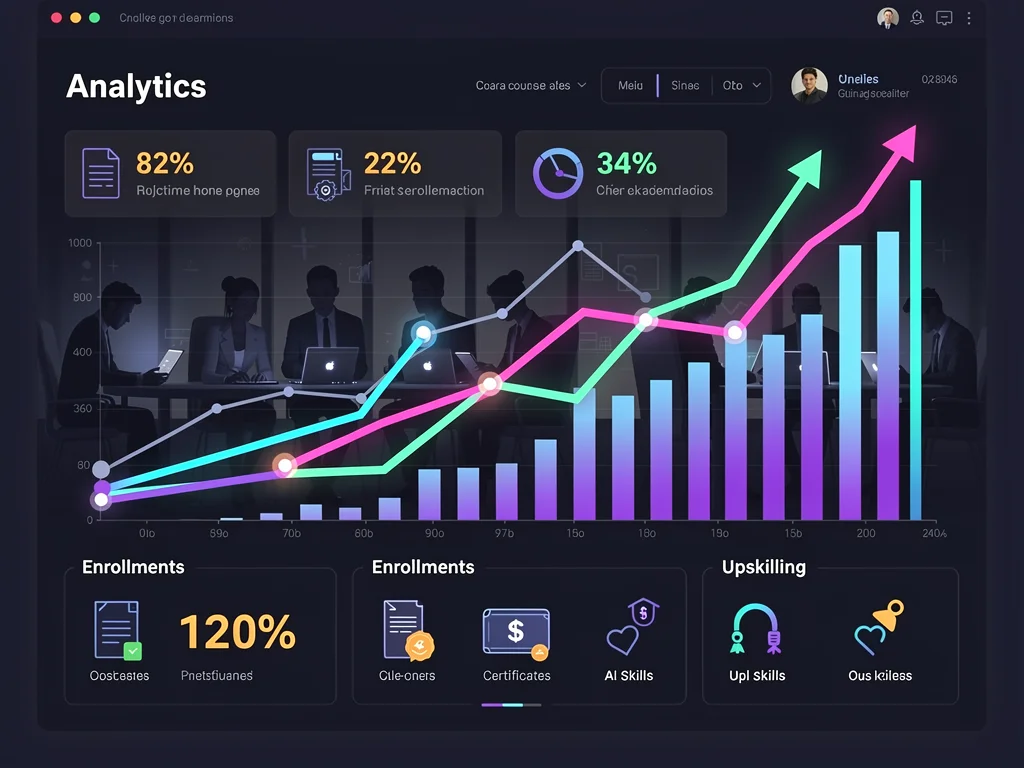
Furthermore, employers are leveraging analytics from online learning platforms to gain insights into their workforce’s skill gaps and learning progress. This data-driven approach allows for more strategic investment in training and development, ensuring resources are allocated effectively to maximise impact.
The integration of online learning into corporate strategies is creating a more resilient and agile workforce, capable of adapting to future challenges and seizing new opportunities. This proactive approach to talent management positions organisations for sustained success in the competitive global economy.
Challenges and Opportunities for Online Learning Platforms
While the trajectory for online learning platforms in US professional development is overwhelmingly positive, the path forward is not without its challenges. Addressing these obstacles will be crucial for sustained growth and maximum impact, while simultaneously unlocking new opportunities for innovation and expansion.
One significant challenge lies in ensuring equitable access to high-quality online education. Disparities in internet access and digital literacy can create a learning divide, potentially excluding segments of the workforce from critical development opportunities. Platforms must work towards solutions that bridge this gap, perhaps through offline content options or partnerships with community initiatives.
Ensuring Engagement and Completion Rates
Maintaining learner engagement and ensuring high course completion rates remain key hurdles for online learning platforms. Unlike traditional classroom settings, the self-paced nature of online learning can sometimes lead to decreased motivation and higher dropout rates.
Interactive Content Design: Incorporating gamification, simulations, and collaborative projects to boost engagement.
Instructor Support and Mentorship: Providing access to expert instructors and peer mentors to foster a sense of community.
Flexible Pacing and Milestones: Allowing learners to progress at their own speed while setting achievable goals.
The opportunity, however, lies in continuously refining the user experience, leveraging advanced analytics to identify engagement patterns, and implementing features that foster a more supportive and interactive learning environment. This includes integrating social learning features and real-time feedback mechanisms.
Another area of opportunity lies in the specialisation of content. As the market matures, platforms that offer highly niche and industry-specific training will likely gain a competitive edge. This includes catering to emerging fields like quantum computing, sustainable engineering, or advanced biotechnologies, where traditional educational pathways may lag.
The Future Landscape: Integration and Specialisation
Looking ahead to 2026 and beyond, the future of online learning platforms in US professional development is characterised by deeper integration into daily work lives and increasing specialisation of content. These trends will solidify their role as indispensable tools for career advancement and organisational agility.
We can anticipate a seamless integration of learning into workflow. Instead of separate learning sessions, professionals might access micro-learning modules or just-in-time training directly within their work applications. This embedded learning approach will minimise disruption and maximise the immediate application of new skills, making learning an organic part of work.
Emerging Technologies and Learning Ecosystems
The next wave of innovation will see online learning platforms becoming central hubs within broader learning ecosystems, incorporating advanced technologies to create immersive and highly effective educational experiences.
Virtual and Augmented Reality: Simulations for hands-on training in complex fields like surgery or engineering.
Blockchain for Credentials: Secure and verifiable digital credentials for skills and certifications.
AI-Powered Career Advising: Intelligent systems guiding professionals through optimal learning paths based on market trends.
Furthermore, the trend towards specialisation will intensify. Platforms will move beyond broad subject categories to offer highly focused, industry-specific certifications and advanced degrees. This specialisation will cater to the demands of niche professions and the need for deep expertise in rapidly evolving sectors.
The collaboration between online learning providers, corporations, and academic institutions will also strengthen, leading to co-created curricula that are directly aligned with industry needs. This synergy will ensure that the skills taught are not only current but also directly applicable to real-world challenges, preparing the workforce for the demands of tomorrow.
Measuring ROI and Demonstrating Value
As investments in online learning platforms continue to grow, the ability to accurately measure return on investment (ROI) and demonstrate tangible value becomes increasingly critical for both individuals and organisations. In 2026, sophisticated metrics and analytical tools are paramount to justifying these educational expenditures.
For individuals, ROI might be measured in terms of career progression, salary increases, or the acquisition of in-demand skills that lead to new opportunities. Platforms are enhancing their reporting capabilities to provide learners with clear insights into how their completed courses translate into career advantages, often through skill badges or verifiable certificates.
Key Metrics for Success
Organisations are moving beyond simple completion rates, focusing on more impactful metrics that link learning directly to business outcomes. This requires robust data collection and analytical frameworks.
Skill Gap Reduction: Measuring the decrease in identified skill gaps post-training.
Employee Performance Improvement: Correlating learning interventions with improvements in productivity, efficiency, or innovation.
Retention and Engagement: Analysing the impact of continuous learning on employee satisfaction and reduced turnover.
The integration of learning analytics with HR and performance management systems is becoming more common, allowing companies to draw direct correlations between professional development activities and broader organisational success. This data-driven approach helps refine training strategies and ensures that learning initiatives are strategically aligned with business objectives.
Ultimately, demonstrating the value of online learning platforms will hinge on their ability to prove a clear and measurable impact on individual career trajectories and organisational performance. This focus on outcomes will drive further innovation in how learning is delivered, tracked, and evaluated.
Key Aspect
Description in 2026
Personalisation
AI-driven adaptive learning paths tailored to individual professional needs and goals.
Workforce Reskilling
Essential for adapting to rapid technological changes and new industry demands.
Seamless Integration
Learning embedded directly into daily workflows and professional applications.
Measurable ROI
Advanced analytics tracking learning impact on career progression and business outcomes.
Frequently Asked Questions About Online Learning in Professional Development
How are online learning platforms making professional development more accessible?▼
Online learning platforms remove geographical and time constraints, allowing professionals to access high-quality education from anywhere, at any time. This flexibility is crucial for individuals with demanding schedules or those in remote locations, democratising access to essential skills and knowledge.
What role does AI play in the personalisation of online professional development?▼
AI algorithms analyse learner data to create tailored learning paths, recommend relevant content, and provide adaptive assessments. This ensures that the learning experience is optimised for individual needs, accelerating skill acquisition and improving engagement for professionals.
How do online platforms support reskilling and upskilling for the future workforce?▼
Online platforms offer a vast array of courses and certifications that address emerging skill gaps and industry demands. They provide efficient, on-demand resources for professionals to acquire new competencies or enhance existing ones, crucial for career longevity in a dynamic job market.
What are the main challenges faced by online learning platforms in professional development?▼
Key challenges include ensuring equitable access for all professionals, maintaining high learner engagement, and improving course completion rates. Platforms are continuously innovating through interactive content, community features, and flexible learning structures to overcome these hurdles.
How can organisations measure the ROI of investing in online learning for employees?▼
Organisations can measure ROI by tracking metrics such as skill gap reduction, improvements in employee performance, increased productivity, and enhanced employee retention. Integrating learning analytics with HR systems provides data-driven insights into the tangible benefits of online professional development.
Conclusion
The 2026 outlook for online learning platforms in US professional development paints a clear picture of an indispensable and ever-evolving ecosystem. These platforms are not merely tools but the very infrastructure enabling continuous learning, skill adaptation, and career growth in an increasingly complex world. Their ability to offer personalised, flexible, and accessible education, coupled with their strategic integration into workforce development, positions them as central to the future success of both individuals and organisations. As technology advances and the demand for specialised skills intensifies, online learning will continue to redefine how professionals learn, grow, and contribute to the economy.
A journalism student and passionate about communication, she has been working as a content intern for 1 year and 3 months, producing creative and informative texts about decoration and construction. With an eye for detail and a focus on the reader, she writes with ease and clarity to help the public make more informed decisions in their daily lives.