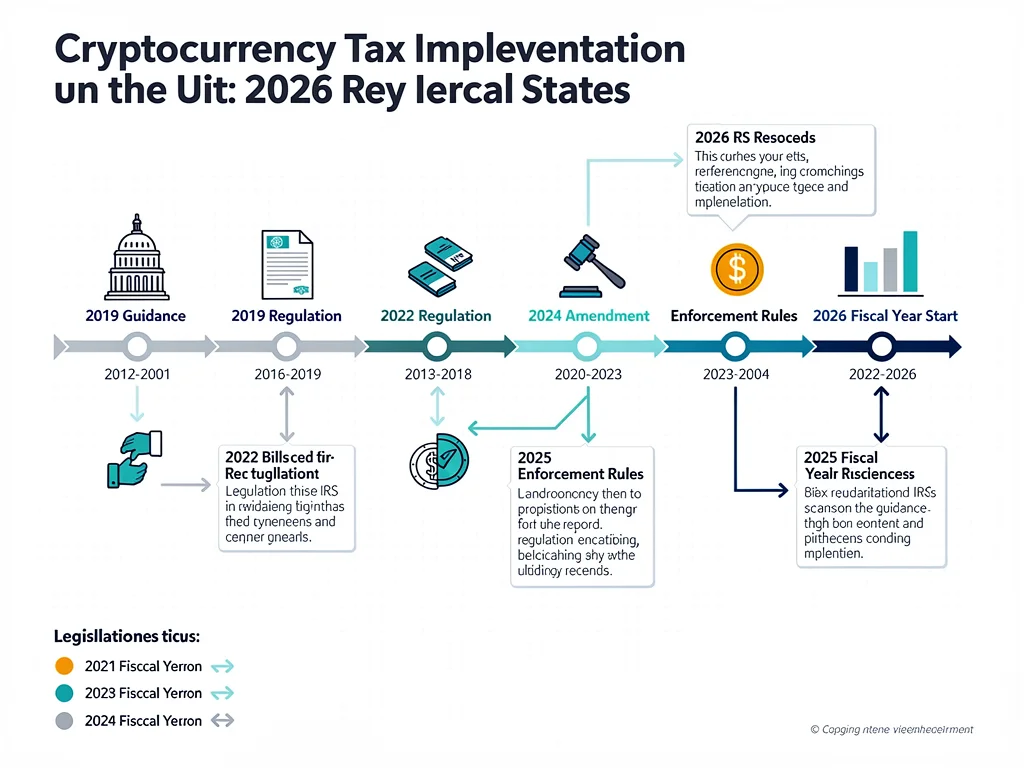
The US crypto tax landscape is set for significant changes in the 2026 fiscal year, introducing new reporting obligations for digital asset brokers and potentially impacting how individuals and businesses manage their cryptocurrency investments and transactions.
Por: Maria Eduarda em 26 de fevereiro de 2026
Última atualização em: 13 de agosto de 2026
The US crypto tax landscape is set for significant changes in the 2026 fiscal year, introducing new reporting obligations for digital asset brokers and potentially impacting how individuals and businesses manage their cryptocurrency investments and transactions.
Are you prepared for the significant shifts in how digital assets will be taxed? The upcoming US crypto tax 2026 regulations are poised to redefine financial reporting for cryptocurrency users across the United States, making it crucial to understand these changes now.
Understanding the Foundation: Why New Regulations?
The digital asset ecosystem has evolved rapidly, presenting unique challenges for tax authorities worldwide. In the United States, the Internal Revenue Service (IRS) and the Treasury Department have been working to bridge the gap between traditional financial regulations and the burgeoning crypto market. These new regulations are not arbitrary; they stem from a broader effort to ensure tax compliance and prevent illicit financial activities within the digital asset space.
The primary driver behind these changes is the need for clarity and fairness. As cryptocurrencies become more mainstream, the volume and complexity of transactions have increased exponentially. Existing tax frameworks, designed for conventional assets, often struggle to adequately address the nuances of decentralised finance (DeFi), NFTs, and various other crypto-related activities. This regulatory push aims to provide a more robust and equitable system for all participants.
The Legislative Impetus: Infrastructure Investment and Jobs Act
A significant catalyst for the 2026 tax changes is the Infrastructure Investment and Jobs Act (IIJA), signed into law in November 2021. This bipartisan bill included provisions that redefine ‘broker’ to encompass a wider range of entities facilitating digital asset transactions. These provisions mandate new reporting requirements, aligning crypto asset reporting more closely with that of traditional securities.
Expanded Definition of ‘Broker’: Now includes crypto exchanges, payment processors, and certain hosted wallet providers.
Information Reporting: Brokers will be required to report gross proceeds and other information to the IRS and to customers, similar to Form 1099-B for stocks.
Effective Date: While the IIJA was enacted in 2021, many of its crypto tax reporting provisions are slated to take effect for transactions occurring in 2025, with reporting due in 2026.
The goal is to enhance transparency and provide the IRS with the necessary data to accurately assess taxes on digital asset gains and income. This move is expected to significantly increase tax revenue from the crypto sector, contributing to national infrastructure projects.
In essence, these regulations are a governmental response to the growing maturity of the crypto market. They reflect a recognition that digital assets are a significant part of the economy and must be integrated into the existing tax system to ensure fairness and prevent tax evasion. Understanding this foundational shift is the first step towards navigating the upcoming changes effectively.
Key Changes for the 2026 Fiscal Year: What to Expect
The 2026 fiscal year will mark a pivotal moment for cryptocurrency taxation in the US. The most impactful changes revolve around enhanced reporting obligations for brokers and a clearer definition of what constitutes a taxable event. These adjustments aim to create a more comprehensive and enforceable tax regime for digital assets, leaving fewer ambiguities for investors and the IRS alike.
One of the most anticipated aspects is the introduction of new Form 1099-DA, or a similar mechanism, which will standardise reporting for digital asset transactions. This form will provide detailed information about sales and exchanges, including the gross proceeds, acquisition costs (where available), and dates of acquisition and disposition. This level of detail is a significant departure from previous years, where much of the reporting burden fell solely on individual taxpayers.
Broker Reporting Requirements
The expanded definition of ‘broker’ under the IIJA is perhaps the most significant change. Entities now classified as brokers will have a legal obligation to report detailed transaction information to the IRS. This includes:
Sales and Exchanges: Gross proceeds from the sale or exchange of digital assets.
Fair Market Value: The fair market value of the digital asset at the time of the transaction.
Transfer Information: Details regarding transfers of digital assets to and from accounts.
This means that if you use a centralised exchange or a hosted wallet provider, that entity will likely be reporting your transaction data directly to the IRS. This shift places a greater responsibility on these platforms to accurately track and report user activity, reducing the potential for non-compliance, whether intentional or accidental, from individual investors.
Furthermore, the regulations are expected to provide clearer guidance on specific crypto-related activities. For instance, staking rewards, DeFi lending, and mining income will likely receive more explicit treatment, moving beyond general income tax principles to specific reporting instructions. This clarity is a double-edged sword: it simplifies compliance for those who understand the rules but also closes loopholes that some may have previously exploited.
The upcoming changes are designed to bring cryptocurrency taxation in line with traditional financial assets. Investors should prepare for a more transparent and scrutinised environment, where transaction data is readily available to tax authorities. Proactive understanding and adaptation to these new requirements will be essential for seamless compliance.
Impact on Individual Investors: What You Need to Know
For individual investors, the US crypto tax 2026 regulations will bring both challenges and opportunities. The increased transparency from broker reporting means that the IRS will have a much clearer picture of individual crypto transactions. This necessitates a more diligent approach to personal record-keeping and tax planning.
One of the primary impacts will be the reduction in the likelihood of unintentional non-compliance. With exchanges reporting directly, discrepancies between what an individual reports and what the IRS receives will be more easily flagged. This puts the onus on investors to ensure their personal records align perfectly with the data reported by their brokers.
Navigating Capital Gains and Losses
The fundamental principles of capital gains and losses on digital assets remain, but the reporting mechanism will be significantly streamlined. When you sell, trade, or otherwise dispose of cryptocurrency, you generally realise a capital gain or loss. This is calculated by subtracting your cost basis (what you paid for the asset, plus transaction fees) from the fair market value you received upon disposition.
Short-Term Capital Gains: Apply to assets held for one year or less, taxed at ordinary income rates.
Long-Term Capital Gains: Apply to assets held for more than one year, typically taxed at lower preferential rates.
Tax Loss Harvesting: The ability to sell assets at a loss to offset capital gains and potentially a limited amount of ordinary income will continue to be a valuable strategy. However, the wash-sale rule, which prevents claiming a loss on a security if you buy a substantially identical one within 30 days, currently does not apply to crypto but could be addressed in future guidance.
The accuracy of your cost basis will become paramount. Without accurate acquisition dates and prices, calculating gains and losses correctly is nearly impossible. Investors who move assets between different wallets and exchanges will need robust tracking systems to maintain a clear audit trail for each unit of cryptocurrency they own.
Furthermore, the regulations are likely to clarify the tax treatment of various crypto activities beyond simple buying and selling. For instance, participating in decentralised autonomous organisations (DAOs), receiving airdrops, or earning yield from DeFi protocols may have more explicit reporting guidelines. Investors should anticipate these complexities and seek professional advice if unsure.
In essence, individual investors must transition from a reactive approach to a proactive one. Understanding your transactions, maintaining meticulous records, and potentially utilising specialised crypto tax software will be crucial for smooth compliance in the 2026 fiscal year and beyond.
Implications for Businesses and Crypto Service Providers
Businesses operating in the cryptocurrency space, from exchanges to DeFi platforms and payment processors, face substantial operational and compliance challenges under the new US crypto tax 2026 regulations. The expanded definition of ‘broker’ means many more entities will be responsible for collecting, verifying, and reporting customer transaction data to the IRS.
The primary implication is the significant investment required in infrastructure and processes to meet these new reporting obligations. This includes developing robust data collection systems, ensuring data accuracy and security, and integrating with IRS reporting mechanisms. Failure to comply can result in substantial penalties, making this a high-stakes endeavour for crypto businesses.
Operational Adjustments for Brokers
Crypto exchanges and other designated brokers will need to overhaul their systems to comply with the new rules. Key operational adjustments include:
KYC/AML Enhancements: More stringent Know Your Customer (KYC) and Anti-Money Laundering (AML) procedures may be necessary to accurately identify taxpayers and their transaction histories.
Transaction Tracking: Implementing advanced systems to track every buy, sell, trade, and transfer of digital assets, including the cost basis where possible.
Form 1099-DA Issuance: Developing the capability to generate and distribute accurate tax forms to customers and the IRS annually.
These requirements are not trivial. They demand significant technological upgrades, increased staffing for compliance departments, and a deep understanding of complex tax law. Smaller crypto businesses, in particular, may struggle to meet these demands, potentially leading to consolidation within the industry.
Furthermore, businesses offering DeFi services or operating decentralised protocols face unique challenges. The concept of a ‘broker’ can be difficult to apply in truly decentralised environments where no single entity controls the platform. The IRS and Treasury are likely to provide further guidance on these specific areas, but businesses should prepare for increased scrutiny and the potential need to adapt their operational models to fit within the regulatory framework.
The goal is to create a level playing field between traditional financial institutions and crypto service providers. While this may increase the regulatory burden, it also lends legitimacy to the crypto industry, potentially attracting more institutional investors and mainstream adoption. Businesses that adapt effectively will be well-positioned for future growth in a regulated environment.
Preparing for the Future: Best Practices for Compliance
Proactive preparation is key to navigating the upcoming US crypto tax 2026 regulations smoothly. Both individual investors and businesses need to adopt best practices now to ensure compliance and minimise potential tax liabilities or penalties. Waiting until the last minute could lead to significant stress and costly errors.
One of the most crucial steps is to embrace meticulous record-keeping. The more detailed and organised your transaction history, the easier it will be to accurately report your crypto activities. This means tracking every purchase, sale, trade, transfer, and any income-generating activity across all platforms and wallets.
Essential Steps for Individuals
For individual crypto investors, consider these best practices:
Track Everything: Maintain a comprehensive record of all crypto transactions, including dates, asset types, quantities, fair market values at the time of transaction, and associated fees.
Utilise Crypto Tax Software: Invest in reputable crypto tax software that can integrate with your exchanges and wallets to automate the tracking and calculation of gains/losses.
Understand Your Cost Basis: Ensure you know the cost basis for all your digital assets. Different accounting methods (FIFO, LIFO, specific identification) can impact your tax liability, so choose wisely and consistently.
Consult a Tax Professional: Seek advice from a tax advisor with expertise in cryptocurrency taxation, especially if you have complex transactions or significant holdings.
It’s also advisable to reconcile your records with any statements or reports you receive from exchanges. If there are discrepancies, address them promptly with the platform. Being proactive in identifying and resolving issues before tax season will save considerable time and effort.
For businesses, the preparation involves a more extensive overhaul of internal systems and processes. This includes conducting a thorough audit of current data collection and reporting capabilities, identifying gaps, and implementing the necessary technological and procedural upgrades. Training staff on new compliance requirements will also be critical to ensure smooth operation.
Ultimately, the goal is to build a robust system that can withstand scrutiny from the IRS. By adopting these best practices, both individuals and businesses can confidently approach the 2026 fiscal year, ensuring they meet their tax obligations efficiently and accurately.
Future Outlook and Potential Further Regulations
The US crypto tax 2026 regulations are unlikely to be the final word on digital asset taxation. The cryptocurrency landscape is dynamic, with new innovations and use cases emerging constantly. As the market evolves, so too will the regulatory framework, necessitating continuous adaptation from investors and businesses alike.
One area ripe for further development is the treatment of decentralised finance (DeFi). While the current regulations aim to capture a broader range of entities, fully decentralised protocols present unique challenges for traditional tax enforcement. Future guidance may seek to define responsibilities within these ecosystems more clearly, perhaps by targeting interfaces, liquidity providers, or even governance token holders.
Anticipated Regulatory Trends
Several trends suggest where future regulations might focus:
International Harmonisation: As cryptocurrency is a global phenomenon, there’s increasing pressure for international cooperation on tax standards. The US may align more closely with frameworks developed by organisations like the OECD (e.g., Crypto-Asset Reporting Framework – CARF).
NFT Taxation: The taxation of Non-Fungible Tokens (NFTs) is still somewhat ambiguous. Future regulations may provide more specific guidance on whether NFTs are treated as collectibles, capital assets, or something else entirely, impacting their tax treatment.
Environmental Impact: While not directly tax-related, growing concerns about the environmental impact of certain cryptocurrencies (e.g., Proof-of-Work mining) could lead to policy discussions that indirectly affect the industry, including potential carbon taxes or incentives for greener alternatives.
The regulatory environment is also heavily influenced by broader economic and political factors. Changes in government administrations, shifts in economic priorities, or even major market events could trigger further legislative action. The underlying principle, however, is likely to remain consistent: ensuring that digital assets are subject to the same tax compliance standards as traditional assets.
For investors and businesses, this means maintaining flexibility and staying informed about ongoing legislative and regulatory developments. Subscribing to industry news, participating in relevant forums, and engaging with tax professionals will be crucial for anticipating and adapting to future changes. The journey towards a fully integrated and regulated crypto economy is ongoing, and the 2026 regulations are just one significant milestone on that path.
Key Aspect
Brief Description
Broker Reporting
Expanded definition of ‘broker’ requires crypto exchanges and other facilitators to report transactions to the IRS.
Tax Form 1099-DA
New or similar form expected for standardised reporting of digital asset sales and exchanges.
Individual Impact
Increased transparency necessitates meticulous record-keeping and proactive tax planning for investors.
Business Compliance
Crypto service providers must invest in significant infrastructure upgrades for data collection and reporting.
Frequently Asked Questions About US Crypto Tax 2026
What is the main change in US crypto tax for 2026?▼
The primary change is the expanded definition of ‘broker’ under the Infrastructure Investment and Jobs Act. This mandates that more entities, including crypto exchanges, report digital asset transactions to the IRS, similar to traditional stock brokers, for transactions occurring from 2025 onwards, reported in 2026.
Will my personal crypto wallet transactions be reported?▼
If you use a non-custodial wallet and conduct peer-to-peer transactions without involving a third-party broker, these transactions are not directly reported by an intermediary. However, you are still legally obligated to report all taxable events, such as capital gains from sales or income from staking, regardless of third-party reporting.
How will these regulations affect DeFi activities?▼
The impact on DeFi is still evolving. While truly decentralised protocols may not have a clear ‘broker,’ platforms acting as intermediaries or offering hosted services within DeFi could fall under the new reporting requirements. Users engaging in DeFi must meticulously track all transactions, including staking rewards and lending income, for tax purposes.
What should I do now to prepare for the 2026 crypto tax changes?▼
Start by ensuring you have comprehensive records of all your cryptocurrency transactions, including acquisition dates, costs, and disposition details. Consider using crypto tax software to automate tracking and calculations, and consult with a tax professional experienced in digital assets to understand your specific obligations.
Are NFTs subject to these new crypto tax regulations?▼
NFTs are generally considered digital assets and are subject to capital gains tax when sold at a profit, similar to other cryptocurrencies. While specific reporting for NFTs may evolve, their inclusion under the broader digital asset definition means transactions are taxable, and platforms facilitating NFT sales may also be subject to broker reporting requirements.
Conclusion
The advent of new regulations for US crypto tax 2026 marks a significant turning point in how digital assets are integrated into the national tax system. These changes, primarily driven by the Infrastructure Investment and Jobs Act, aim to enhance transparency, ensure compliance, and standardise reporting across the burgeoning cryptocurrency market. For individual investors, this means a greater need for meticulous record-keeping and proactive tax planning, as brokers will be directly reporting transaction data to the IRS. Businesses operating in the crypto space face substantial operational adjustments, requiring significant investment in compliance infrastructure. While these regulations present challenges, they also signify the growing maturity and mainstream acceptance of cryptocurrencies. Staying informed, adopting best practices, and seeking professional guidance will be paramount for navigating this evolving landscape successfully, ensuring both individuals and entities remain compliant and prepared for future developments in digital asset taxation.
A journalism student and passionate about communication, she has been working as a content intern for 1 year and 3 months, producing creative and informative texts about decoration and construction. With an eye for detail and a focus on the reader, she writes with ease and clarity to help the public make more informed decisions in their daily lives.